

If you’re trying to figure out how to get more views on YouTube, it’s likely because you want your videos to reach the right people—and actually be watched. YouTube is the second-largest search engine in the world, and for B2B brands, it’s where real research happens. Decision-makers come here to understand problems, evaluate solutions, and decide whom they trust. Views are signals of relevance, credibility, and usefulness.
But getting more views doesn’t mean going viral or playing the algorithm for a quick spike. For most brands, especially in B2B, success looks quieter and more intentional. It’s about showing up consistently, answering real questions, and creating videos people want to finish watching. When you stop chasing trends and start focusing on value, YouTube becomes less of a gamble and more of a growth channel you can rely on.
Understand What the YouTube Algorithm Actually Cares About
To understand how to get views on YouTube, you have to start with what the platform is trying to do: keep the right people watching. YouTube rewards content that serves viewers well, not content that simply casts the widest net.
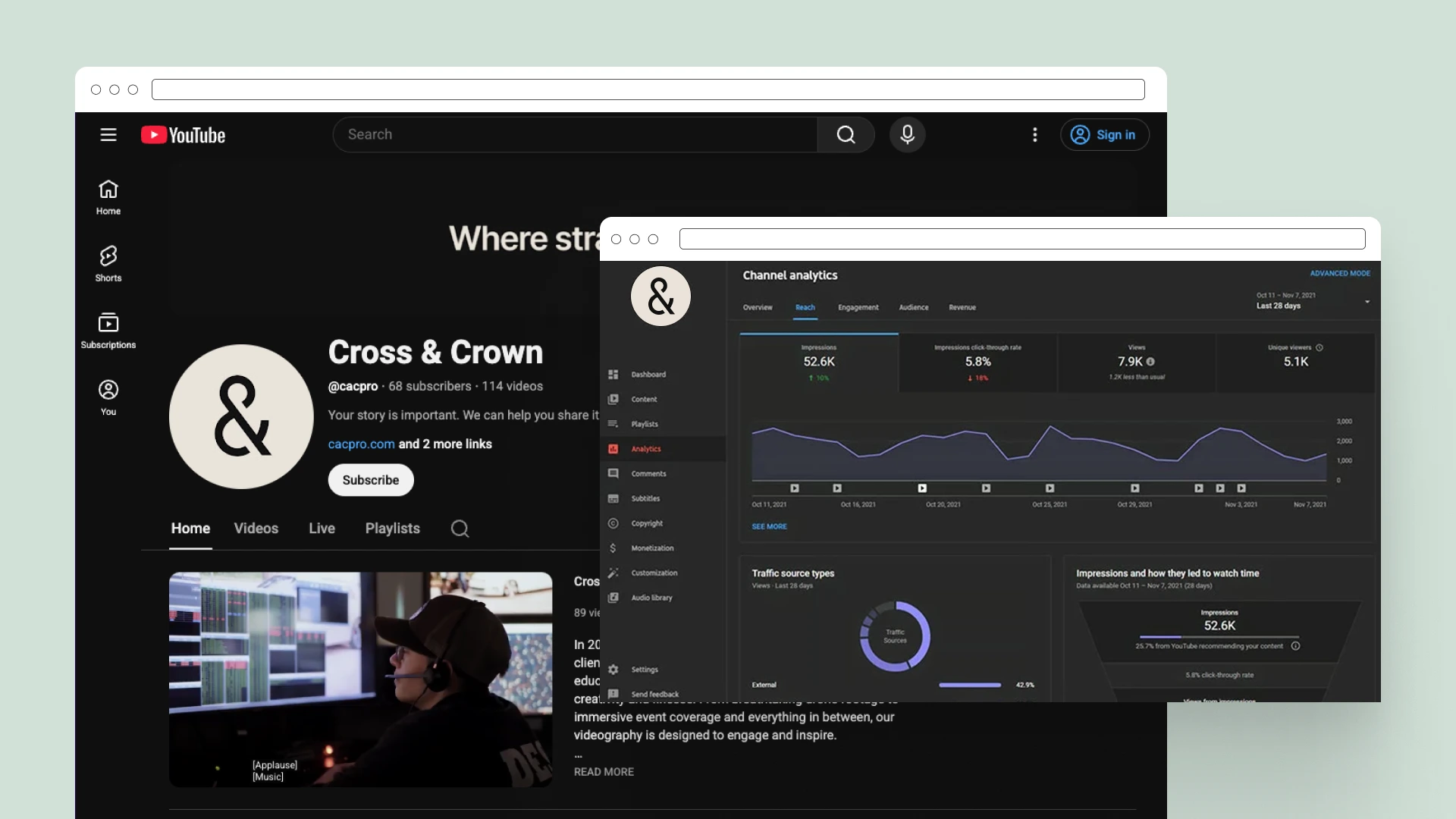
YouTube uses a few core signals to decide whether your videos are worth recommending to more viewers:
- Click-Through Rate: CTR demonstrates that your content is relevant enough to the viewer that they click on it to view. There’s enough to entice them to learn more.
- Watch Time and Audience Retention: Now that they are on your video, how long are they staying? Are they just watching a few seconds and backing out, or do they stay for most of the video? The longer you capture their attention, the more worthy your videos are.
- Engagement: Engagement refers to likes, comments, and shares. It’s that extra step that the viewer takes to show value in your content.
- Consistency and Publishing Cadence: With routine posting on your channel, you’re more likely to capture attention. YouTube wants more than one-time hits but consistently new content.
The algorithm favors content that keeps the right audience watching. It’s not always about the biggest audience or the number of views.
1. Start with Search: Optimize Videos Like YouTube Is a Search Engine
If you want more views, YouTube needs to be treated like what it is: a search engine. Optimization on YouTube works differently than on Google, but the principle is the same—help people find the content they’re actively looking for.
That starts with YouTube-specific keyword research. The way people search for videos is more descriptive and intent-driven than product-focused. They’re looking for explanations, walkthroughs, and examples—not sales pages.
Your titles and descriptions should reflect that behavior clearly. Match your language to what’s actually in the video, explain the value upfront, and write in natural, straightforward terms. When your content is easy to understand and easy to find, both viewers and the algorithm respond.
2. Thumbnails & Titles: Earn the Click (Without Clickbait)
Don’t try to trick people into clicking. That’s not the audience you want or need. Instead, balance performance with brand credibility. To do that, focus on these strategies:
- Keep text minimal. No long descriptions are needed.
- Titles should provide clarity and not hype. Skip the gimmicks and tell them what’s really included.
Decision makers are allergic to clickbait. They watch for it and purposely avoid it. Instead, be clear, concise, and open. Maintain your brand consistency in your content as well as your thumbnails. This is their first indication of who your business is.
3. Hook Viewers in the First 10 Seconds
The first 10 seconds determine whether your video goes anywhere or quietly disappears, so you’ll need to skip long intros and get to the point quickly. Open with the problem you’re solving, the insight you’re sharing, or the outcome viewers can expect. Make it immediately clear why the video exists and how it delivers on the promise that brought them there.
When viewers stay, YouTube takes notice. Strong retention leads to more recommendations and more opportunities for your content to be seen. But when people click in and leave just as fast—often because the title overpromised or the intro stalled—those signals work against you.
4. Post Consistently (and Think in Series, Not One-Off Videos)
Consistency is less about frequency and more about reliability. Instead of treating each video as a standalone effort, build repeatable formats and series that develop ideas over time. This approach works especially well for B2B brands and complex services, where trust is built through continued exposure, not a single touchpoint.
A predictable publishing cadence, clear themes, and well-structured playlists give viewers a reason to stay longer and come back for more. Over time, that familiarity compounds into stronger retention, deeper trust, and more consistent viewership.
5. Use Engagement Signals to Your Advantage
Effective engagement creates moments that invite participation naturally:
- Ask questions that extend the conversation, not generic prompts. The best questions feel specific and worth answering.
- Pin comments that add context or spark discussion, using them to guide ongoing dialogue.
- Encourage subscriptions with a clear reason. Viewers are more likely to subscribe when they understand what they’ll gain by coming back.
When engagement is earned rather than forced, it strengthens both viewer trust and algorithmic signals.
6. Repurpose and Promote Beyond YouTube
One video should support multiple touchpoints across your marketing ecosystem, reinforcing the same message in different formats. This can be done by sharing short-form clips on LinkedIn, Instagram, and through email or embedding videos into blogs and landing pages to add clarity and context where people are already engaging with your brand.
When video is integrated across channels, views compound faster and content continues working long after it’s published.
7. Measure What Actually Matters (Especially for B2B)
Views alone don’t tell the full story. If you want to understand how to get more YouTube views that actually contribute to growth, you need to look at what happens after someone presses play.
Focus on signals that reflect real interest and intent:
- Watch time
- Retention graphs
- Subscriber growth
- Traffic to site or next action
For B2B brands, YouTube success is measured by influence, not impressions. When you track the right metrics, you gain clearer insight into what’s working and why.
Growing on YouTube Takes Strategy, Not Guesswork
Sustainable growth on YouTube doesn’t come from luck or one viral moment. It comes from clarity, consistency, and a clear understanding of your audience. The brands that perform best are intentional in how they show up, what they share, and why their content exists.
When you focus on value and build with purpose, YouTube becomes a reliable channel for visibility, trust, and long-term growth. If you’re ready to put a plan behind your video strategy, we’re here to help. Contact Cross & Crown today.

Cross & Crown
Based in Chambersburg, PA, we build & refine brands that inspire trust, drive engagement, lead with purpose, and ensure a thriving future.
Last Update: February 5, 2026
Read More

September 1, 2026
A County Government’s Guide to Modern Public Communications
Public trust is built one interaction at a time. Discover how county governments can modernize their communications, improve the resident experience, and support long-term engagement with practical, people-first strategies.
Read Post
May 26, 2026
Stand Out in Your Industry With Drone Video Marketing Services
Cross & Crown uses FAA-certified drones to create aerial video and photography for marketing across real estate, construction, tourism, and local brands throughout Pennsylvania and the Mid-Atlantic region. Read more to discover how drone video marketing works, where to use it, and creative ways to make your brand stand out.
Read Post
January 6, 2026
Livestream Production That Makes Learning Stick
Learn how livestream production transforms virtual training into engaging learning experiences that hold attention and improve retention.
Read Post