
Artificial intelligence has moved quickly from novelty to daily tool. In design, that shift has sparked equal parts curiosity, excitement, and concern. Designers are experimenting with new workflows, agencies are rethinking production models, and brands are recalibrating what creativity looks like when machines can generate concepts in seconds.
The conversation often centers on speed and automation, but the deeper story is about how creative roles are changing, not disappearing. AI graphic and web design is reshaping how work gets done, what skills matter most, and where human judgment still plays a critical role.
Rather than repeating the familiar headlines, this article explores what’s actually changing in day-to-day design work and what that means for designers, agencies, and brands moving forward.
Why AI and Design Dominate the Conversation
AI has become central to design discussions for one simple reason: it dramatically lowers the time and effort required to produce visual and conceptual work. Tasks that once took hours—drafting layouts, generating concepts, exploring variations—can now happen in minutes.
That shift raises understandable questions. Will designers be replaced? Will creativity become automated? Will originality suffer?
At the same time, many designers see opportunity:
- Faster production opens space for deeper thinking.
- Rapid ideation allows more experimentation.
- Lower barriers make design more accessible to teams without large creative budgets.
Most articles fall into one of two camps: AI as threat or AI as breakthrough. In reality, the impact is more nuanced. AI is changing the shape of design work itself, redistributing time and attention rather than eliminating creative roles.
What’s Actually Changing in Design Today
From execution to strategic thinking
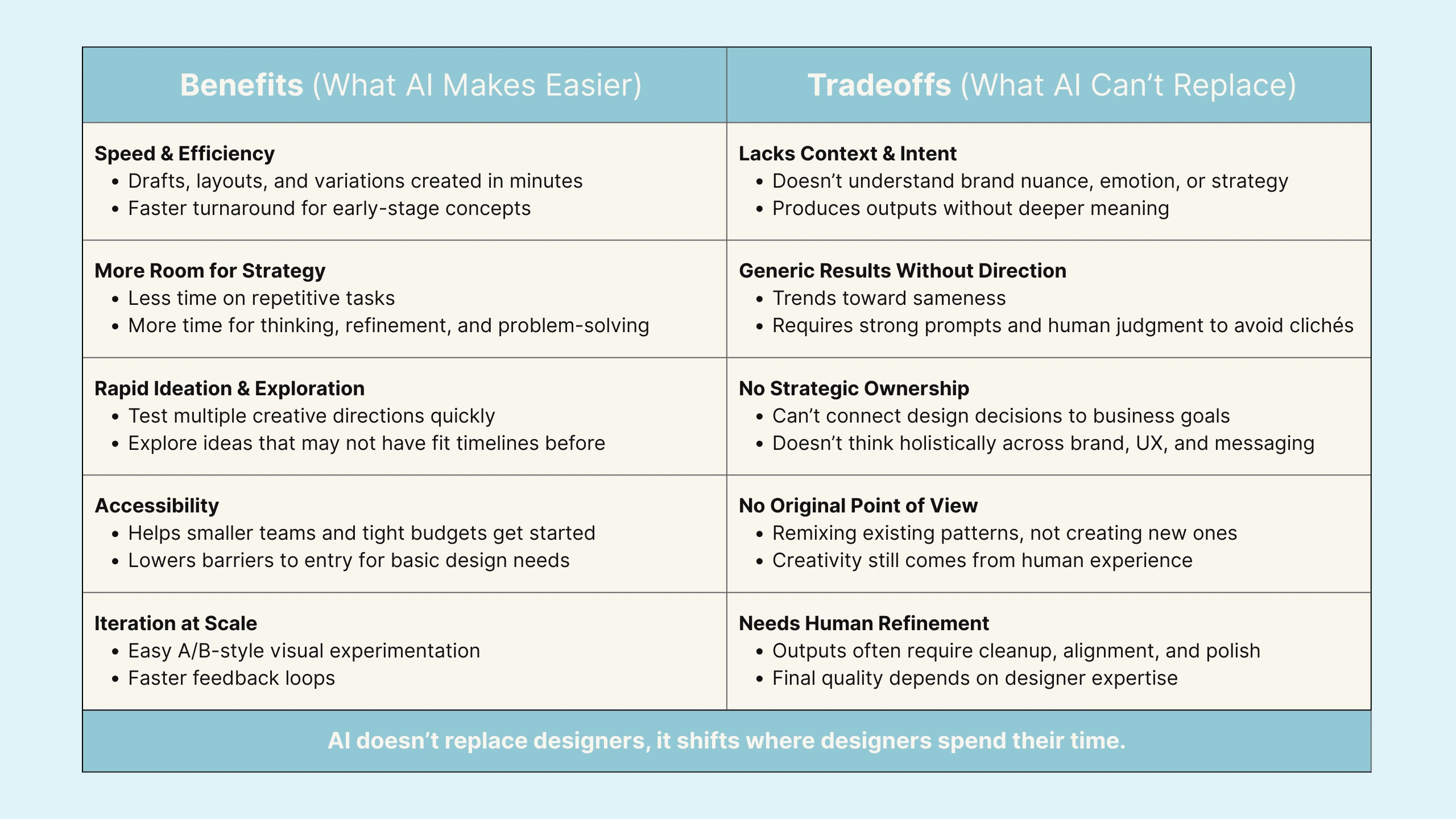
One of the clearest shifts is the move away from repetitive production tasks and toward higher-level decision-making. Designers now spend less time building first drafts and more time refining ideas, guiding direction, and shaping outcomes.
AI accelerates early-stage work—mood boards, rough concepts, and layout experiments—allowing designers to explore more possibilities before committing. This shifts value upstream, where strategy, prioritization, and creative judgment matter most.
Instead of being judged primarily by output volume, designers are increasingly evaluated by clarity of thinking, problem framing, and the ability to guide projects toward strong solutions.
Tools vs. taste
AI tools are becoming easier to use, but ease of access doesn’t equate to quality. Generating options is simple. Choosing the right one is not.
Taste, context awareness, and brand sensitivity remain distinctly human skills. AI can produce hundreds of design directions, but it cannot understand brand nuance, emotional tone, cultural relevance, or long-term strategy the way people do.
Designers now act more as editors and curators, shaping raw material into cohesive, intentional work. The differentiator isn’t technical ability; it’s creative judgment.
Perspectives from the Field
Across disciplines, designers describe AI less as a replacement and more as leverage.
- UX designers often point to faster prototyping and testing cycles. Rapid iteration makes it easier to validate ideas early, leading to better user outcomes and fewer costly pivots later.
- Graphic designers describe AI as a powerful brainstorming partner. Instead of starting with a blank page, they can explore directions quickly, freeing up energy for refinement and storytelling.
- Product designers emphasize improved collaboration. AI-generated concepts help teams align visually earlier in the process, reducing miscommunication and speeding consensus.
Across these perspectives, a consistent theme emerges: AI expands creative capacity, but direction and discernment remain human responsibilities.
Where Humans Still Matter Most
Creative direction and taste
No algorithm can replicate intuition, lived experience, or emotional intelligence. Creative direction depends on understanding subtle cues—tone, mood, narrative, and intention—that extend beyond data.
Human designers still define what “good” looks like. They decide what feels right, what resonates, and what aligns with long-term brand identity.
Brand consistency and storytelling
Brands are built through consistency and narrative. AI can generate assets, but it cannot fully grasp the emotional architecture behind a brand.
Maintaining coherence across touchpoints requires a deep understanding of voice, audience, and positioning. Designers translate abstract values into visual language, ensuring every interaction feels intentional and connected.
Collaboration and communication
Design rarely happens in isolation. It requires listening, interpreting, clarifying, and negotiating. Translating client goals into meaningful design outcomes depends on empathy and communication—skills AI does not possess.
Human designers bridge the gap between business objectives and creative execution, making collaboration smoother and outcomes stronger.
Implications for Designers, Brands, and Agencies
For designers, the shift places greater emphasis on critical thinking, storytelling, and creative leadership. Technical proficiency still matters, but strategic depth is becoming equally important.
For agencies, workflows are evolving. Faster production cycles allow teams to focus more on insight, experimentation, and refinement. Agencies that invest in training and thoughtful integration of AI tools will gain efficiency without sacrificing quality.
For brands, AI introduces both opportunity and responsibility. Speed increases, but oversight remains essential. Strong brands will use AI to enhance creativity, not replace it, ensuring consistency and authenticity remain intact.
Across all three, experience, judgment, and trust continue to define long-term value.
Looking Ahead
AI in design is not a finished story. Tools will evolve, workflows will shift, and creative roles will continue to adapt. What feels disruptive today will likely feel foundational in a few years.
What remains constant is the role of human creativity. AI expands what’s possible, but it does not replace the instincts, insights, and emotional intelligence that make design meaningful.
If you’re navigating how AI fits into your creative and digital strategy, Cross & Crown helps teams think clearly, design thoughtfully, and move forward with confidence.

Cross & Crown
Based in Chambersburg, PA, we build & refine brands that inspire trust, drive engagement, lead with purpose, and ensure a thriving future.
Last Update: February 12, 2026
Read More

October 5, 2026
How to Market a Church Without Compromising Your Mission
Church marketing can feel at odds with a church’s mission, but thoughtful communication can help more people find and connect with the ministry already happening in their community. Here’s how to market a church with clarity, authenticity, and a focus on serving people well.
Read Post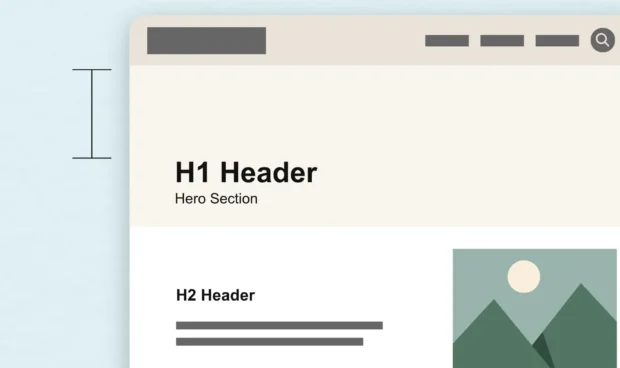
September 22, 2026
White Space Is One of the Most Powerful Design Tools
White space is more than empty space on a page. Learn how intentional spacing in web design improves readability, guides attention, and creates a better user experience.
Read Post
September 8, 2026
Google Ad Grant Eligibility: What Nonprofits Get Wrong
Many nonprofits focus on qualifying for the Google Ad Grant but overlook what comes next. This article explores the misconceptions that limit success, why strategy matters as much as eligibility, and how organizations can turn free advertising into meaningful engagement with donors, volunteers, and the communities they serve.
Read Post