

Today, website speed is much more of a business decision than it is a technical one. It directly influences search engine rankings, user experience, and conversions. Fast-loading pages help Google crawl your site efficiently, reduce bounce rates, and improve overall engagement. In this article, we’ll explore the question “What impact do fast-loading pages have on SEO?” and what you can do to optimize your website.
What Is Page Speed, and How Is It Measured?
Page speed, also called site speed, refers to how quickly a web page loads and becomes interactive for users. It’s not just about the first image appearing; it includes how fast all content, scripts, and resources load.
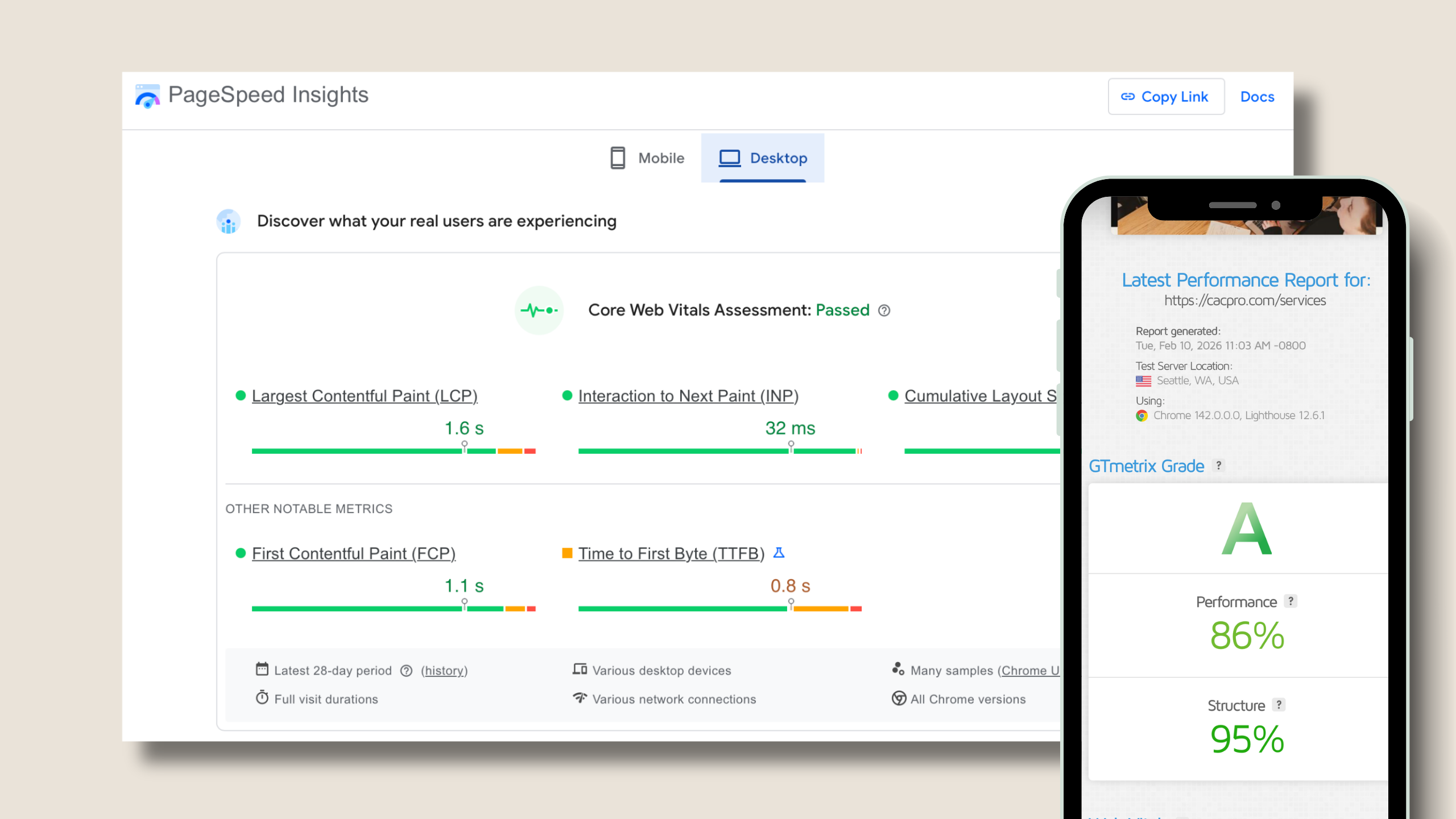
Key Page Speed Metrics Google Cares About
Google evaluates page speed using several metrics known as Core Web Vitals:
- Time to First Byte (TTFB): How long it takes for the server to respond.
- First Contentful Paint (FCP): When the first text or image appears.
- Time to Interactive (TTI): When the page becomes fully usable.
- Largest Contentful Paint (LCP): The time it takes for the main content to load.
- Mobile Load Speed: Google prioritizes mobile-first indexing, so mobile performance is critical.
Accurately measuring these metrics helps identify bottlenecks and improve SEO performance. Tools like Google PageSpeed Insights and GTmetrix provide actionable insights.
Why Fast-Loading Pages Matter for SEO
Page speed is a ranking factor for Google, meaning faster sites are more likely to appear higher in search results. But the benefits extend beyond rankings.
Page Speed as a Google Ranking Factor
Google considers page load times in its algorithms. Faster pages rank higher, especially on mobile searches.
Impact on Search Visibility and Crawl Efficiency
Slow websites can prevent search engines from crawling all pages efficiently. This can delay indexing and reduce the chance of ranking for competitive keywords.
Core Web Vitals and Algorithm Updates
Google’s Core Web Vitals measure user experience factors like loading, interactivity, and visual stability. Meeting these benchmarks improves both SEO and overall user satisfaction.
How Page Speed Impacts User Behavior and Conversions
Even the best SEO strategy fails if users leave before engaging with your content.
Bounce Rate and Engagement
Slow-loading pages increase bounce rates, signaling poor user experience to search engines.
User Experience Across Devices
With more people browsing on mobile devices, performance across all screens is critical. A slow mobile experience reduces engagement and conversions.
Conversion Rate Optimization (CRO)
Faster websites encourage users to explore and complete desired actions. Even small improvements in page speed can significantly boost conversions.
What Is the Ideal Page Speed for SEO?
While targets vary by industry:
Desktop: 2–3 seconds or faster
Mobile: 2.5–3 seconds or faster
Monitoring your site against industry benchmarks ensures optimal performance for both users and search engines.
Desktop vs. Mobile Performance Benchmarks
Google emphasizes mobile-first indexing, so mobile performance should match or exceed desktop speeds.
Common Reasons Websites Load Slowly (and How to Fix Them)
Most slow websites are just carrying more weight than they need to. Understanding what causes delays makes it easier to focus on the fixes that actually matter.
1. Large Page Weight and Unoptimized Assets
Oversized images, videos, and graphics are one of the biggest contributors to slow load times. Compressing files, using modern formats like WebP, and loading media only when it’s needed can dramatically speed things up without sacrificing quality.
2. Code Overhead and Render-Blocking Resources
Websites often accumulate extra CSS, JavaScript, and scripts over time. When too much code runs before a page can fully load, everything feels slower. Cleaning up unused code, minifying files, and deferring non-essential scripts helps pages load faster and more smoothly.
3. Server Performance and Hosting Location
If a server takes too long to respond, page speed suffers before anything even appears on screen. Faster hosting and servers located closer to your audience can significantly reduce delays and improve overall performance.
4. Third-Party Scripts and Plugins
Analytics tools, ads, chat widgets, and plugins can quietly slow a site down. Keeping only the tools you truly need—and removing the rest—helps reduce unnecessary load and improves reliability.
5. Network Conditions and Device Limitations
Not every visitor has fast internet or a powerful device. Optimizing your site for mobile users and lower-bandwidth connections ensures a better experience for everyone, not just users on high-speed networks.

How to Measure and Test Your Website’s Page Speed
Use tools like Google PageSpeed Insights, GTmetrix, or WebPageTest to measure performance. These tools provide recommendations for:
- Reducing load time
- Optimizing images
- Minimizing code and scripts
- Improving server response
Check your site regularly to maintain optimal speed.
Improve Page Speed and SEO Performance
Fast-loading pages don’t just make search engines happy; they make your website easier, smoother, and more enjoyable to use. When people have a better experience, they’re more likely to stick around, engage with your content, and take the next step.
At Cross & Crown, we help businesses connect technical improvements with real marketing goals—so faster pages lead to better visibility, stronger engagement, and results you can actually feel. If your site feels slower than it should, it might be time to take a closer look.

Cross & Crown
Based in Chambersburg, PA, we build & refine brands that inspire trust, drive engagement, lead with purpose, and ensure a thriving future.
Read More

April 1, 2026
Branding as a Strategic Advantage in Modern SEO (2026)
SEO has changed. While technical execution still matters, branding now plays a far more central role in visibility, authority, and trust. This article explores how branding and SEO work together today and why recognizable, consistent brands are better positioned for long-term growth.
Read Post
March 23, 2026
How AI Is Changing Design—Without Replacing Designers
AI is reshaping how design work gets done, but not by replacing designers. Instead, it’s changing where time, creativity, and judgment are spent. This article explores the real impact of AI on design, drawing on practitioner insight to show how creative roles are evolving and where human expertise still matters most.
Read Post
March 9, 2026
How to Increase a Bank’s Customer Base
Learn how to increase customer base in banks by improving customer experience, strengthening digital strategy, and focusing on long-term retention and growth.
Read Post