

There was a time when a brick façade, a friendly teller, and a handshake were enough to keep a bank thriving. Those days are long gone. Today, even the smallest community bank has to meet customers where they spend most of their time—online. Digital marketing for banks is no longer optional, and a barebones website or generic social posts simply won’t cut it. People expect financial institutions to be visible, helpful, and human in the digital space.
Many banks are already investing time and money in digital marketing, yet their campaigns fall flat. Cookie-cutter posts, recycled vendor content, and overly cautious messaging fail to build trust or attract new customers. The key is authenticity: marketing that reflects the way people actually live, bank, and connect today.
Digital Marketing Strategies for Banks That Work
The challenge is how can banks move beyond forgettable posts and start engaging customers in meaningful ways? The following six strategies focus on authenticity, human connection, and smart use of technology—helping your bank build trust, stand out in a crowded market, and drive results online.
1. Lean Into Authentic, Localized Marketing
Too many banks rely on prepackaged campaigns, posting the same generic content as the bank down the street. Community banks thrive when they highlight their local roots because people choose them for trust and relationships, not corporate polish. Instead of a generic “Support Local Business” post, share a true story—like the family-owned bakery your bank helped finance. Authentic, local storytelling builds connection and makes your bank memorable.

2. Balance Compliance With Creative Storytelling
Compliance is a reality for every bank, but caution doesn’t have to mean bland messaging. The trick is storytelling—connecting emotionally while staying within guardrails.
For example, a short video of a young couple buying their first home can focus on their experience and your team’s guidance, rather than reciting rates. Stories humanize your bank, making your marketing memorable without compromising compliance.
3. Elevate the Digital Customer Experience
Even the best campaign can fail if the digital experience is clunky. Modern customers expect banking to be as easy as ordering groceries online or streaming a movie. If you’re promoting a new mobile app, send users to a clean landing page with a single clear action—“Download the App”—and a short demo video showing how simple it is to deposit a check.
Seamless digital experiences turn clicks into action and reinforce trust.
4. Use Data and Analytics to Drive Smarter Decisions
Digital marketing for banks without data is like lending without a credit check—you’re flying blind. Analytics reveal what resonates and what doesn’t, helping you allocate resources efficiently.
For instance, if posts about staff volunteering get three times the engagement of CD rates, adjust your mix and invest more in content that connects. Data-driven decisions improve ROI while keeping your marketing relevant and effective.
5. Highlight the Human Side of Banking
When banks talk about themselves online, it’s often a stream of numbers: loan rates, interest, and APRs. People don’t remember numbers—they remember people. Share stories like a “Meet the Team Monday” post featuring a teller reflecting on changes since the 1980s or a loan officer helping first-time homeowners. These glimpses into real people build warmth, relatability, and trust with your audience.
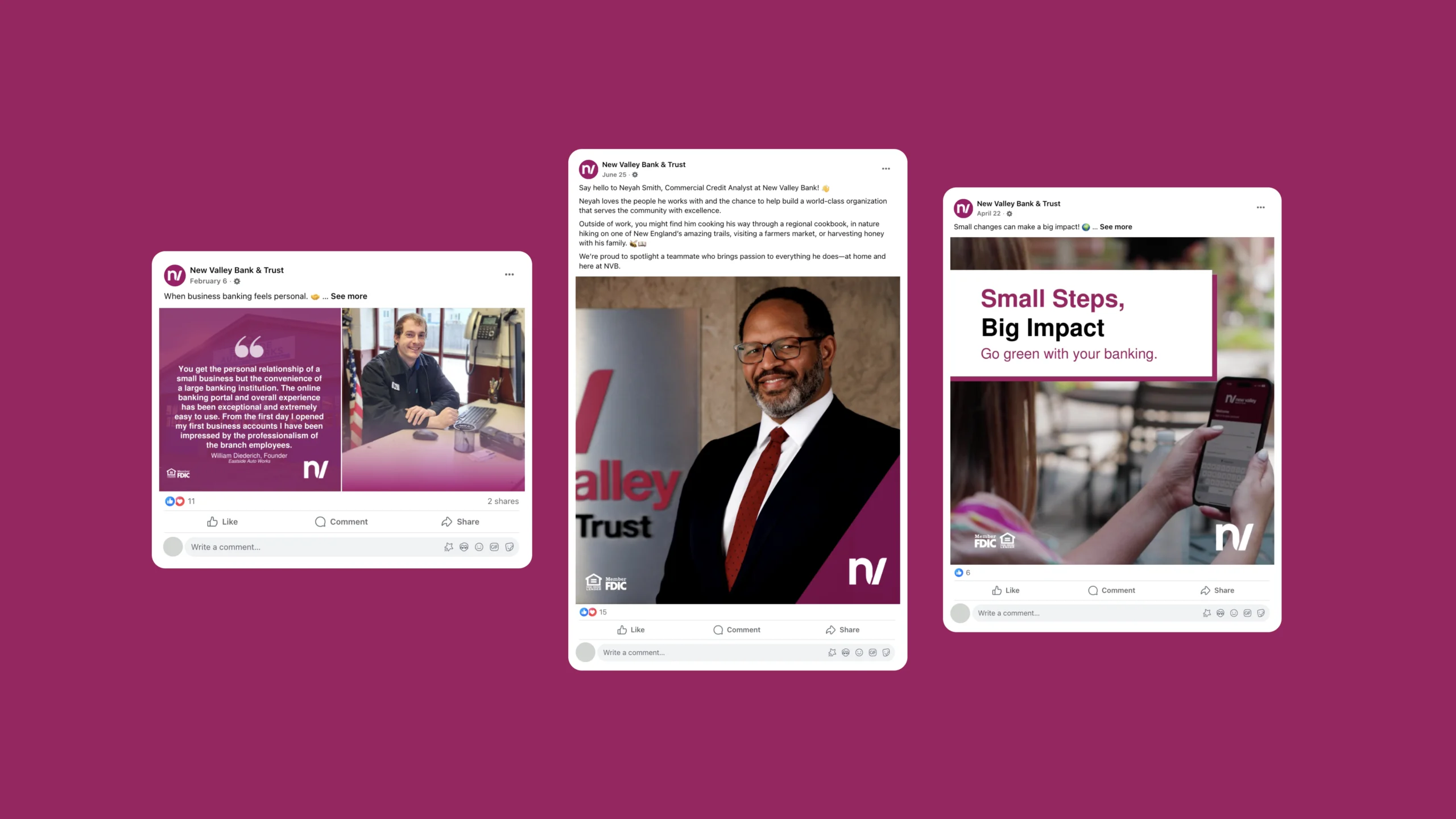
6. Differentiate From Big Banks With Personalization
Small and mid-sized banks can’t outspend national giants, but they can out-connect them. Personalization is your secret weapon—knowing customers by name, making local decisions, and showing up in ways big banks can’t.
Instead of generic campaigns, send personalized birthday emails from branch managers or share photos from local events your bank sponsored. Personal, community-focused content strengthens loyalty and sets you apart.
Make Digital Marketing a Core Strategy, Not an Afterthought
Many banks treat digital marketing as optional—a post here, an email there, a blog when there’s time. The result is a sporadic presence that feels disconnected and uninspiring.
The banks that succeed treat digital marketing like any other core business function: strategically, consistently, and with their audience in mind. Build a monthly content calendar, mix in financial tips, community highlights, and client stories, and use analytics to refine your approach. When done right, digital marketing for banks becomes more than posts and ads—it becomes a way to tell authentic stories, build trust, and strengthen relationships in a digital world.
Ready to elevate your bank’s digital presence? Contact Cross & Crown today to create a strategy that connects, engages, and delivers results.

Cross & Crown
Based in Chambersburg, PA, we build & refine brands that inspire trust, drive engagement, lead with purpose, and ensure a thriving future.
Last Update: February 10, 2026
Read More

October 12, 2026
The State of Marketing in the Age of AI
AI is changing how marketers work, from content creation and automation to personalization and campaign strategy. Here’s what we’re seeing, what we think is worth paying attention to, and why human strategy and creativity will continue to matter.
Read Post
October 5, 2026
How to Market a Church Without Compromising Your Mission
Church marketing can feel at odds with a church’s mission, but thoughtful communication can help more people find and connect with the ministry already happening in their community. Here’s how to market a church with clarity, authenticity, and a focus on serving people well.
Read Post
September 22, 2026
White Space Is One of the Most Powerful Design Tools
White space is more than empty space on a page. Learn how intentional spacing in web design improves readability, guides attention, and creates a better user experience.
Read Post