

B2B marketing involves a lot of decisions. You may find yourself asking:
- What should the headline say?
- Which call to action should appear on a landing page?
- Should an ad lead with a product benefit or a customer pain point?
- Is a shorter form better?
- Would a different email subject line get more people to open?
Many times, marketers make their best call and move on. That is where A/B testing can change the process. Instead of debating which version might perform better, marketers can put two versions in front of an audience and let the results inform the next decision.
The concept is simple. The opportunity for B2B marketers is much bigger than it may seem.
What Is A/B Testing?
A/B testing, also called split testing, compares two versions of a marketing asset to see which one performs better against a specific goal.
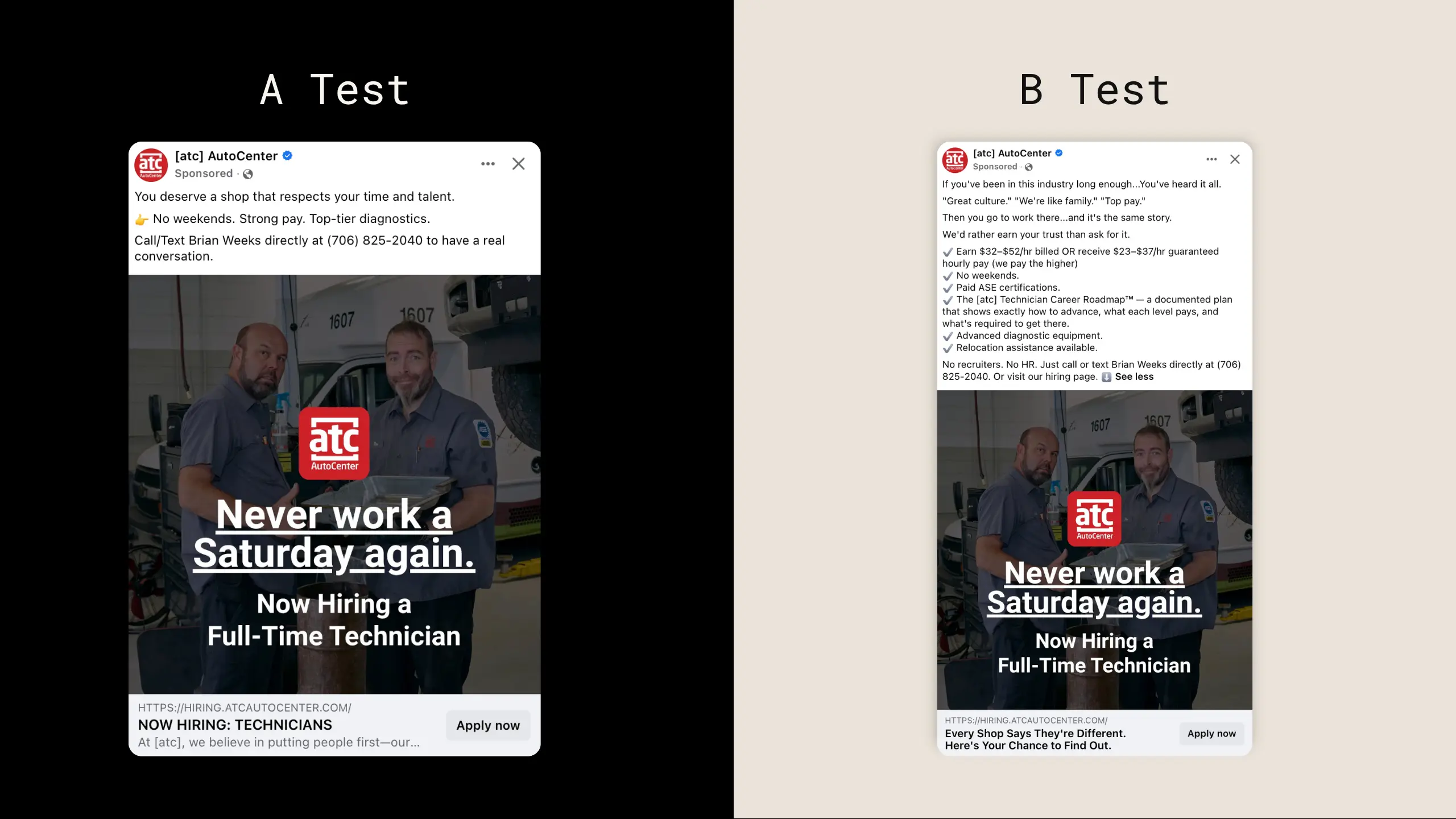
Version A might use one headline while Version B uses another. One landing page might have a short form while another asks for more information. An email might test two subject lines, or a paid campaign might run two different creative concepts.
The most important part to understand is that a good A/B test changes one meaningful variable at a time, and you’ll understand why later.
Why Is A/B Testing Important in B2B?
B2B marketing has a reputation for being difficult to test. The audiences can be smaller, buying cycles can take months, and conversions may happen offline. Moreover, a lead form submission does not necessarily mean a qualified opportunity, and a click does not necessarily mean someone is ready to buy.
Those challenges are also reasons to be more thoughtful about testing, not reasons to avoid it.
B2B companies still have measurable actions happening throughout the customer journey. Someone can click an ad, visit a service page, download a resource, watch a video, submit a form, request a quote, or book a consultation. Each of those interactions creates an opportunity to learn.
For a smaller marketing team, those lessons can be particularly valuable. Cross & Crown works primarily with small and medium-sized businesses and nonprofits, where marketing resources often need to work hard. Our strategy includes conversion optimization specifically focused on testing form placement, copy, and design to improve lead capture.
Testing gives those teams a way to make decisions based on evidence instead of preference.
There Is Almost Always Something You Can Test
A common misconception is that A/B testing requires a major campaign, a large advertising budget, or thousands of conversions. It does not.
A B2B company could:
- Test whether visitors respond better to “Request a Consultation” or a more specific CTA tied to the service they are considering.
- Test an email subject line that focuses on a problem against one focused on a solution.
- Test two creative concepts for a paid campaign while keeping the audience, budget, offer, and placement consistent.
Even a pricing page can present testing opportunities. A company might test how pricing information is introduced, how packages are organized, or which next step is presented after someone reviews the options.
The goal is to identify the next decision worth learning more about. That makes A/B testing less of a one-time project and more of an ongoing marketing habit.
What Does A/B Testing Look Like in B2B?
Consider a B2B service company trying to generate more qualified inquiries through its website.
The marketing team notices that a service page receives plenty of traffic but produces few inquiries. There are several possible explanations. For example, the page may not make the service clear enough, the CTA may be too generic, the form may ask for too much information, or the visitor may not see a compelling reason to take the next step.
Rather than redesigning the entire page based on assumptions, the team could start with one question.
Does a more specific CTA lead to more qualified inquiries?
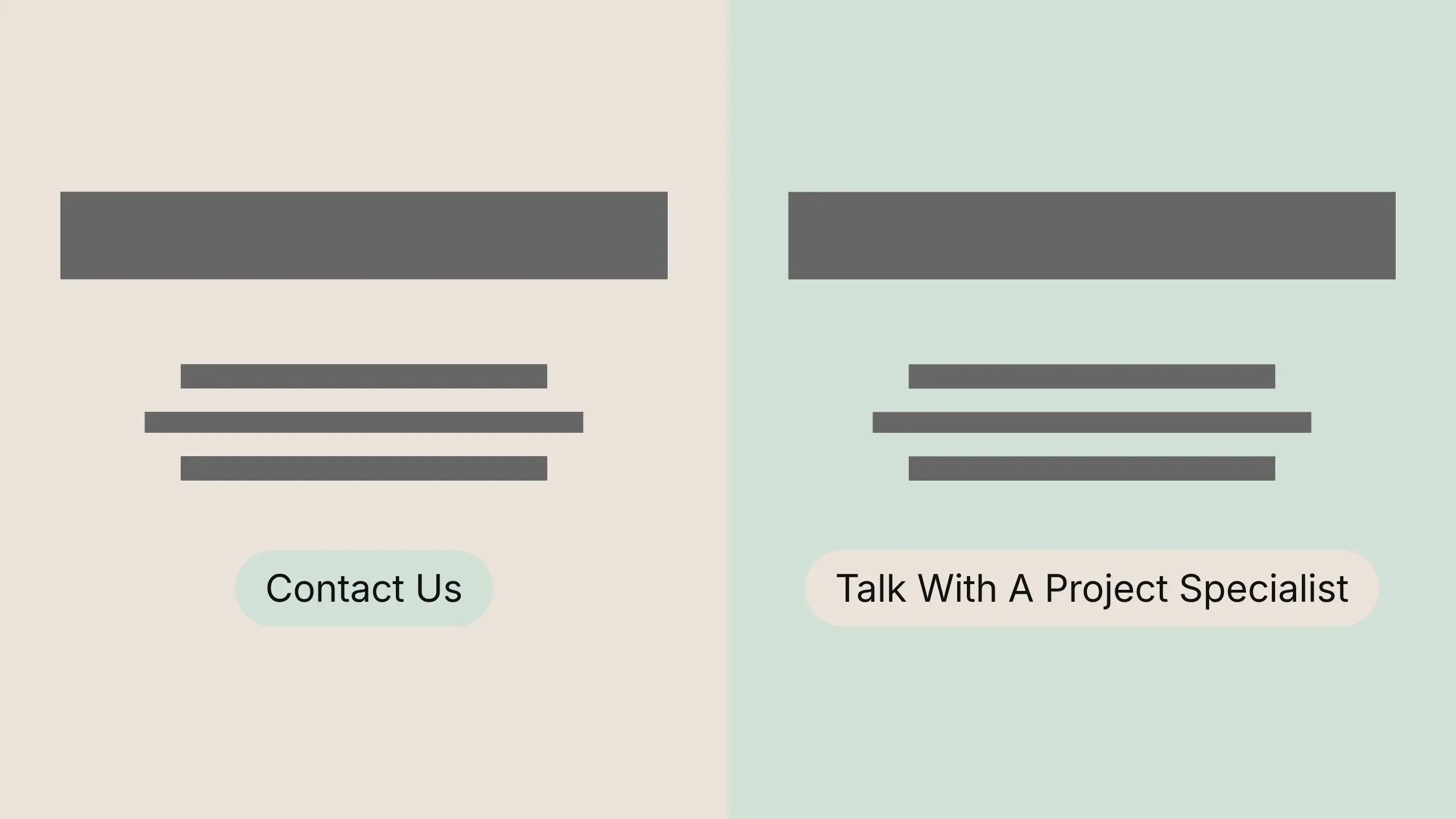
Version A might say “Contact Us.” Version B might say “Talk With a Project Specialist.”
The rest of the page stays the same. Traffic is split between the two versions, and the team measures the agreed-upon conversion goal.
If Version B performs better, that gives the team evidence for the next decision. Overall, A/B testing is not about finding a magic button color or discovering one headline formula that will work everywhere. Instead, it’s a way to reduce uncertainty, one decision at a time.
What Can B2B Marketers Test?
The possibilities extend across nearly every part of a digital campaign.
Website and UX: Test headlines, calls to action, form length, form placement, page layouts, navigation, service-page messaging, or the placement of supporting content.
Email: Test subject lines, preview text, send times, calls to action, content length, or different ways of presenting an offer.
Paid advertising: Test headlines, descriptions, creative, offers, landing pages, or messaging angles.
Content: Test different titles, calls to action, content upgrades, or promotional messages that encourage a reader to take the next step.
Video: Test different openings, thumbnails, titles, or calls to action depending on the platform.
The right test depends on the goal. For example, a campaign designed to generate awareness may care about engagement or video completion, whereas a lead-generation campaign may care about qualified form submissions.
The metric should be decided before the test begins.
A/B Testing Can Also Tell You What Not to Do
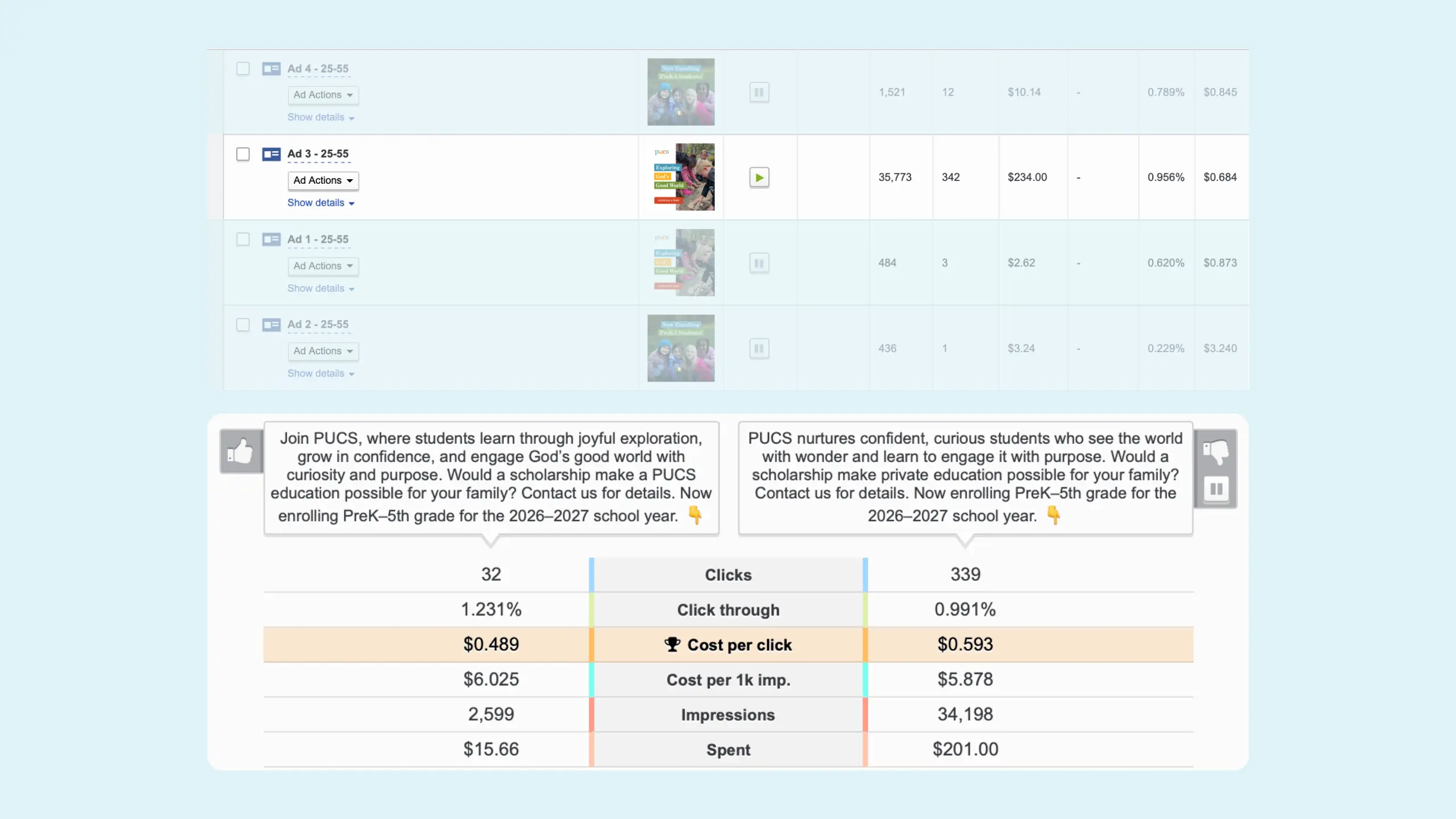
One of the most useful outcomes of a test is a losing version. That may sound counterintuitive, but a test that tells you what does not work can save your team from investing more time and money in the wrong direction.
Maybe the clever headline gets fewer clicks than the straightforward one, or the redesigned form generates fewer completed submissions. Maybe the highly promotional ad attracts more clicks but fewer qualified leads.
Marketing teams sometimes treat unsuccessful campaigns as failures that should be forgotten. A properly structured test turns an unsuccessful variation into information. The important thing is to resist the temptation to explain the result before you have enough evidence.
The Biggest A/B Testing Mistake: Testing Too Much at Once
As touched on before, A/B testing only works when the test itself is controlled.
Imagine a company launches two landing pages. Version A has the original headline, a long form, a stock photograph, and a blue CTA button. Version B has a new headline, shorter form, different photography, and a completely different CTA.
Version B generates more leads, which is great! But what caused the improvement? This is one of the biggest problems with poorly structured split testing. The numbers may look convincing while the conclusion is weak.
A clean test gives you a clearer answer. Change one meaningful variable. Keep the rest as consistent as possible. Define the goal, run the test long enough to collect useful data, then evaluate the result in context.
B2B marketers also need to look beyond the first conversion. If one version generates twice as many form fills but produces lower-quality leads, it may not be the better version for the business.
A higher conversion rate is not automatically a better marketing outcome.
So, Is A/B Testing Worth It?
For B2B marketers, we think the answer is yes, with one important condition: the test needs to be tied to a real business question.
There is little value in running experiments simply because a platform makes it possible. A/B testing should help answer questions that matter to the campaign, the customer journey, or the business.
The best tests often start with something fairly ordinary.
- A page gets traffic but few inquiries.
- An email gets opened but rarely clicked.
- An ad gets attention but does not produce qualified leads.
- A form gets started but rarely completed.
Those are all invitations to investigate. You may find that the original version was better. You may find a small improvement, or you may even uncover a bigger problem that requires a different solution altogether. Any outcome is useful.
For B2B organizations, where every marketing decision can carry a meaningful investment of time and budget, there is a lot of value in learning before making the next decision.
Make Testing Part of the Process
A/B testing gives B2B marketers a practical way to replace assumptions with evidence. With the right question, a clear variable, and a meaningful metric, even a small test can reveal something worth carrying into the next campaign, landing page, email, or ad.
Ongoing learning can make marketing more intentional over time. If you have questions about what is working, what could be improved, or where your next test should start, Cross & Crown can help you build testing into a broader digital marketing strategy. Contact us to start the conversation.

Cross & Crown
Based in Chambersburg, PA, we build & refine brands that inspire trust, drive engagement, lead with purpose, and ensure a thriving future.
Last Update: October 1, 2026
Read More

October 12, 2026
The State of Marketing in the Age of AI
AI is changing how marketers work, from content creation and automation to personalization and campaign strategy. Here’s what we’re seeing, what we think is worth paying attention to, and why human strategy and creativity will continue to matter.
Read Post
October 5, 2026
How to Market a Church Without Compromising Your Mission
Church marketing can feel at odds with a church’s mission, but thoughtful communication can help more people find and connect with the ministry already happening in their community. Here’s how to market a church with clarity, authenticity, and a focus on serving people well.
Read Post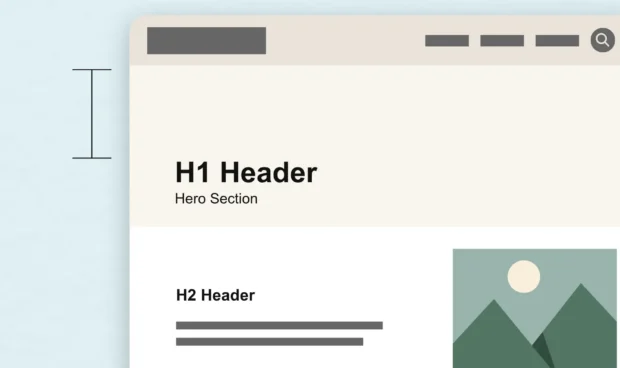
September 22, 2026
White Space Is One of the Most Powerful Design Tools
White space is more than empty space on a page. Learn how intentional spacing in web design improves readability, guides attention, and creates a better user experience.
Read Post