

Research shows that nearly 50% of consumers form their impression of a business based on its website design—making it one of the most influential tools in any digital strategy. A holistic web design approach considers the full ecosystem of a website, including structure, content, branding, accessibility, and performance. When aligned with digital marketing goals, this type of design goes beyond aesthetics to drive real results.
In this article, discover how digital marketing web design—when approached holistically—can elevate user experience, strengthen brand identity, and support long-term business growth.
1. Aligns User Experience With Strategic Goals
Holistic web design starts with clarity of purpose. Rather than treating layout as the priority, this approach ensures that every aspect of the site—navigation, structure, copy, and visuals—works in service of strategic goals like lead generation, engagement, or conversion. When each element is intentionally aligned with user behavior and business outcomes, the result is a site that performs, not just one that looks good.
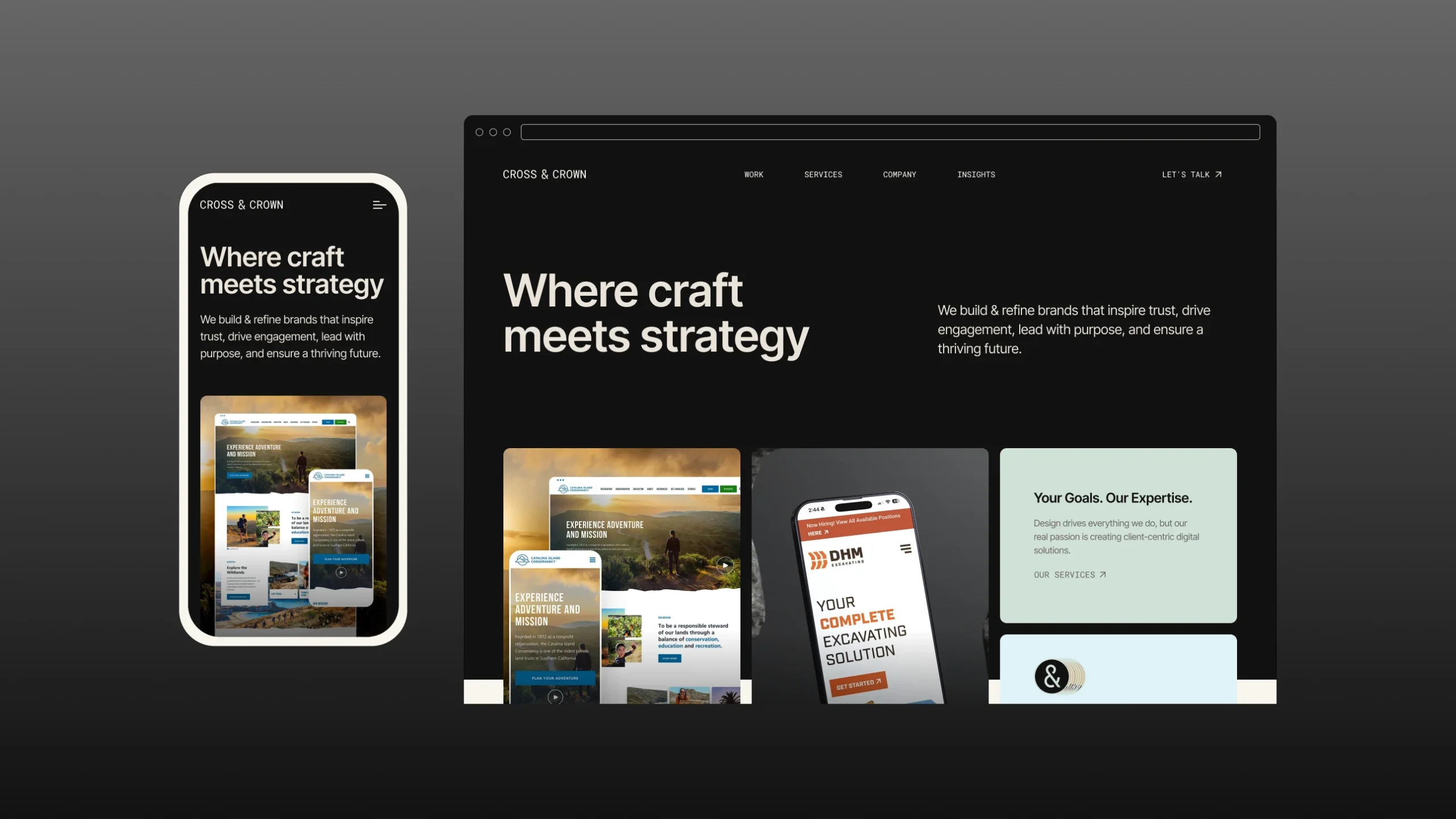
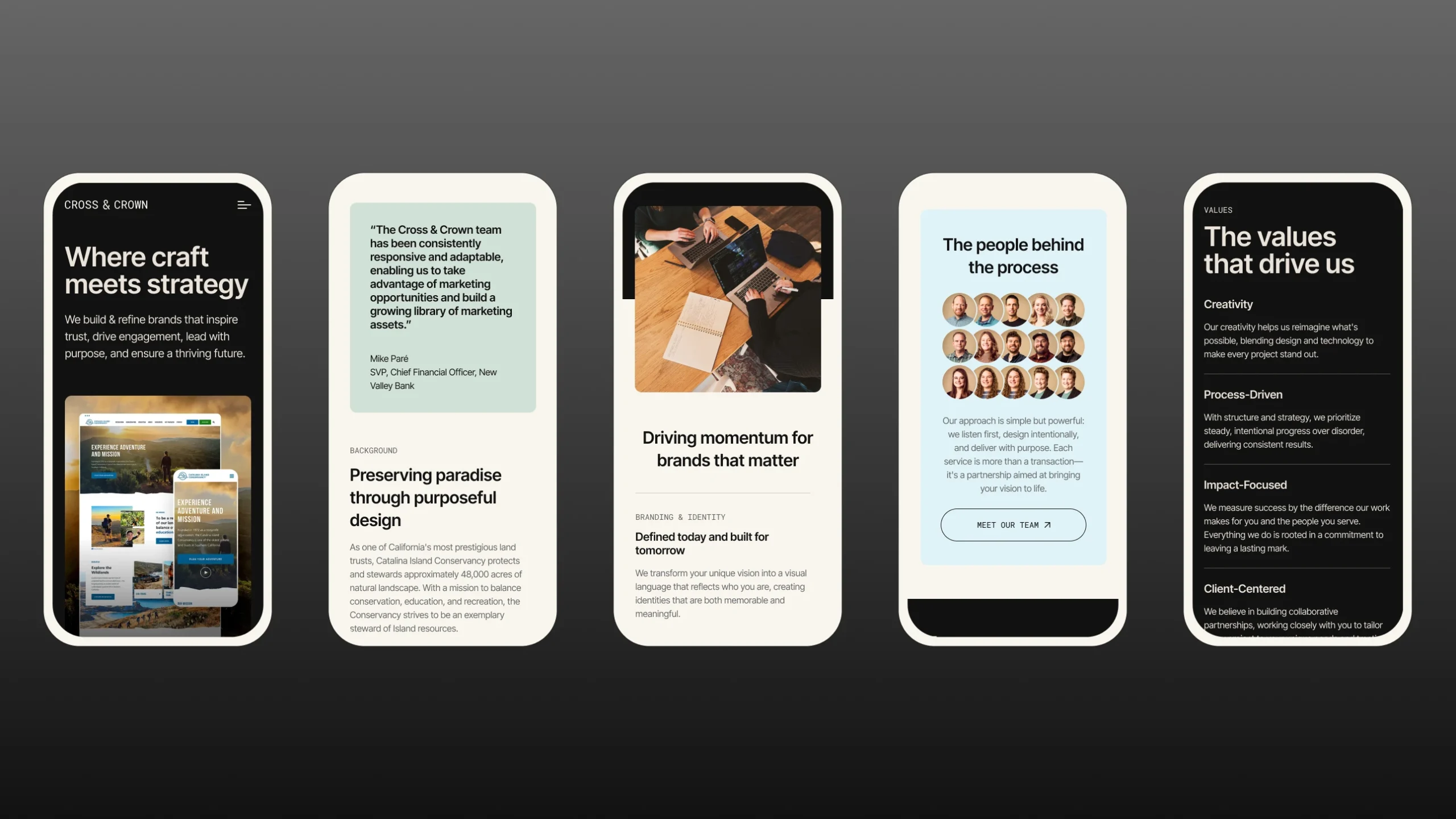
A recent redesign of the Cross & Crown website illustrates this principle in action. The goal was to clearly communicate the agency’s expertise in holistic web design and digital marketing while driving qualified leads. Every decision—from the streamlined navigation that points visitors to key content to the placement of high-impact calls to action—was made with user experience and conversion in mind.
Design that functions with purpose eliminates friction. Visitors find what they need quickly, understand next steps clearly, and are more likely to take meaningful action. When strategy leads design, the website becomes a true extension of the marketing engine—driving better results, deeper engagement, and measurable growth.
Read More: 5 Reasons Web Design and Marketing Create a Powerful Impact
2. Integrates Brand Identity and Functionality
Rather than treating design as separate from your overall brand strategy, holistic web design seamlessly weaves them together. It ensures that the website’s functionality actively reinforces and communicates your core brand values. Every choice, including typography, color palettes, and layout decisions, reflects your organization’s unique tone and personality while it simultaneously supports optimal usability for your visitors.
Consistency across visual and functional aspects builds trust and credibility with your audience. When users experience a cohesive message and a reliably functional interface, they perceive your brand as more professional and trustworthy. Such integration also helps your website stand out significantly from competitors who might rely on generic templates that fail to convey a distinct brand identity.
Read More: 7 Tips for Mastering the Fusion of Web Design and Branding
3. Future-Proofs Your Website for Growth
A holistic web design proactively plans for the evolution of your website, which accommodates both shifting marketing needs and advancements in technology. Instead of a static design that quickly becomes outdated, this method builds a flexible foundation. Designers achieve this through modular structures, where content and features exist as independent, interchangeable blocks. They also implement flexible content management systems that allow for straightforward updates and modifications without extensive redevelopment.
New product lines, marketing tools, or refreshed content can be added with ease as business goals evolve—without starting from scratch. By eliminating the need for frequent, full-scale redesigns, a flexible site structure saves both time and financial resources. Adaptable design ensures a digital presence that stays current, performs effectively, and scales alongside growth.
Read More: How a Holistic Marketing Strategy Drives Sustainable Growth
4. Enhances SEO Without Compromising Design
Many perceive web design and search engine optimization (SEO) as conflicting priorities, but in a holistic web design framework, they function as collaborative partners. A design that considers SEO from the outset integrates best practices for search visibility directly into the website’s architecture and user experience. This involves careful attention to content hierarchy, which means organizing information logically so search engines and users can easily understand its importance. It also prioritizes fast load speeds, as search engines favor sites that offer a quick experience for users.
Furthermore, digital marketing web design that is holistic inherently includes mobile responsiveness, which guarantees your site functions well on all devices. Semantic HTML markup, another key component, uses appropriate tags to convey meaning to search engines, which helps them index your content accurately. When these elements work together, the result is not only improved search engine rankings but also a significantly smoother and more intuitive user experience.
Read More: What is Holistic SEO? A Deep Dive into Integrated Marketing Strategies
5. Centers Accessibility and Inclusion
A holistic approach to web design prioritizes equitable access from the start—not as a last-minute addition or a box to check for compliance. Designing with accessibility in mind results in websites that are easier for all users to navigate and engage with, regardless of ability or the technology they use. This inclusive focus not only reflects modern values but also supports compliance with standards such as the Americans with Disabilities Act (ADA).
Centering inclusion broadens reach by accommodating users with visual, auditory, motor, or cognitive impairments. Techniques like high-contrast text and background combinations, for example, can significantly enhance readability for visually impaired users. Beyond expanding access, accessible design strengthens brand credibility—demonstrating a genuine commitment to serving every user with intention and care.
Read More: How to Keep Up With Digital Marketing Trends and Increase Revenue
6. Improves Data Collection and Marketing Insights
When your website’s design is purposefully structured around clear business goals, the process of measuring its performance becomes significantly more straightforward and effective. Holistic web design facilitates better data collection because user interactions are more predictable and trackable. Clearly defined calls to action (CTAs), simplified user paths, and logically organized content layouts contribute directly to improved analytics accuracy. For instance, if a primary goal is to increase newsletter subscriptions, a well-designed site will have prominent and easily accessible sign-up forms.
This enhanced data quality empowers your marketing teams with actionable data that allows you to understand user behavior more deeply: which content resonates most, where users encounter obstacles, and which marketing channels drive the most valuable traffic. These insights allow for more informed decisions when you optimize campaigns and refine your marketing strategies.
Read More: 3 Reasons Why a Local Website Design Company is Better for Your Small Business
Holistic Web Design as a Strategic Advantage
A well-designed website offers more than just an attractive appearance; it is purposeful, adaptable, inclusive, and highly effective. Cross & Crown can help transform your website into a powerful tool that drives your business forward. Contact us today to discuss how our expertise in holistic web design and digital marketing can elevate your brand and accelerate your growth.

Cross & Crown
Based in Chambersburg, PA, we build & refine brands that inspire trust, drive engagement, lead with purpose, and ensure a thriving future.
Last Update: February 10, 2026
Read More
October 26, 2026
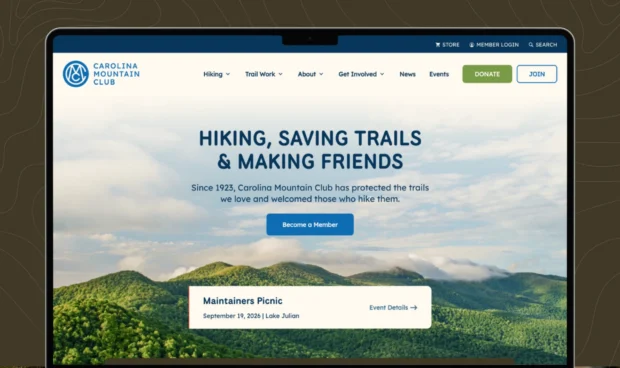
How Much Should a Nonprofit Website Cost in 2026?
Five agencies can give you five very different website quotes. Learn what goes into nonprofit website cost in 2026, from strategy and design to development, content, and ongoing support.
Read Post
October 19, 2026
A/B Testing in B2B: The Marketing Experiment You’re Probably Not Running
A/B testing gives B2B marketers a practical way to learn what resonates with their audience. Explore how split testing can improve websites, campaigns, emails, and paid advertising while helping teams make smarter marketing decisions.
Read Post
October 12, 2026
The State of Marketing in the Age of AI
AI is changing how marketers work, from content creation and automation to personalization and campaign strategy. Here’s what we’re seeing, what we think is worth paying attention to, and why human strategy and creativity will continue to matter.
Read Post