

Banks and financial institutions have never had more ways to reach potential customers and more competition for their attention.
Consumers are researching financial decisions online, comparing options across multiple channels, and forming opinions long before they speak with a banker. At the same time, community banks, credit unions, and regional institutions are competing not only with one another, but also with national brands and fintech companies.
That’s why modern marketing strategies for banks and financial institutions must do more than promote products. They must build trust, demonstrate expertise, and create meaningful customer experiences across every digital touchpoint.
Trust Is Still the Foundation
Unlike many industries, financial services operate in a trust-first environment. Consumers know they are selecting a long-term financial partner, not just a checking account or mortgage lender.
Every marketing effort should reinforce confidence. This includes:
- Website experience
- Brand messaging
- Customer reviews
- Educational content
- Social media presence
- Community involvement
These days, trust is established online before a customer ever submits a form or schedules a conversation. That’s why consistency across every digital touchpoint matters before a customer makes informed decisions. A strong website, consistent messaging, and helpful content all contribute to credibility.

Invest in Valuable Content That Educates Rather Than Sells
One of the most effective marketing strategies for banks and financial institutions is educational content. Financial products are often complex, and customers frequently have questions before they’re ready to make a decision.
They search for answers like:
- How much can I afford for a house?
- What is a HELOC?
- How do business loans work?
- What should I look for in a checking account?
- How can I improve my credit score?
These questions represent opportunities. When a financial institution provides useful, unbiased information, it positions itself as a trusted resource rather than simply another provider.
Educational content can take many forms:
- Blog posts
- Resource guides
- Videos
- Webinars
- FAQs
- Downloadable tools
The goal is to meet customers where they are in their decision-making journey and provide value before asking for commitment.
Strengthen Your SEO Strategy
Search engine optimization remains one of the most valuable long-term investments for financial institutions to increase visibility. Consumers actively search for financial products, services, and guidance every day.
A strong SEO strategy helps institutions appear when potential customers are looking for information. This includes:
- Optimized website content
- Local SEO
- Service pages
- Educational resources
- Frequently asked questions
- Technical website performance
Many financial institutions focus heavily on branded searches while overlooking non-branded opportunities. For example, someone searching for “small business loan options” may not know which bank they want to work with yet. Appearing during those early research stages creates opportunities to build awareness and trust before competitors enter the conversation.
Prioritize Local Visibility
When it comes to local customer relationships, community banks and regional financial institutions possess a significant advantage that national brands often struggle to replicate. Marketing strategies should emphasize that advantage.
Local visibility efforts might include:
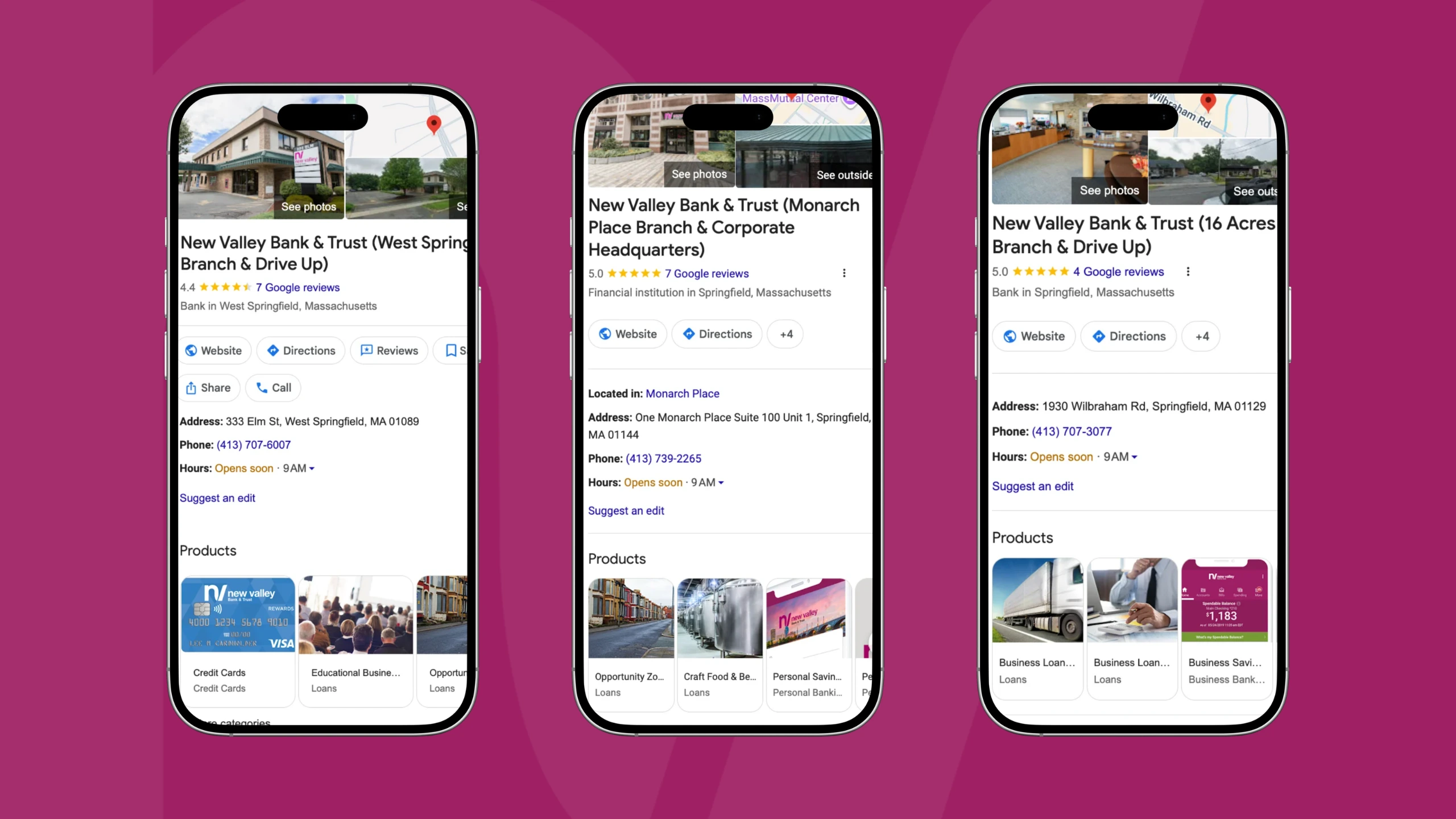
- Google Business Profile optimization
- Community event promotion
- Local SEO campaigns
- Community partnerships
- Local success stories
- Regional content creation
Consumers frequently prefer institutions that understand their communities and local economic conditions. Highlighting local expertise can create meaningful differentiation.
Create a Website That Supports Customer Goals
Your website is often the first interaction a prospective customer has with your institution. Unfortunately, many financial websites function more like digital brochures than customer-focused experiences.
A high-performing financial institution website should help users quickly understand services, find information, compare options, access resources, and complete next steps. Clear navigation, strong calls-to-action, mobile responsiveness, and conversion-focused landing pages all contribute to a better user experience.
Leverage Digital Advertising Strategically
Paid advertising remains a valuable component of modern banking marketing strategies when used thoughtfully. Rather than focusing solely on awareness, institutions should align advertising efforts with customer intent. Examples include:
- Mortgage campaigns
- Business lending campaigns
- Deposit growth initiatives
- Wealth management services
- Recruitment efforts
Targeted advertising allows institutions to reach specific audiences with relevant messaging while supporting broader marketing objectives.
The most effective campaigns connect advertising, landing pages, content, and follow-up communications into a unified customer journey.

Don’t Ignore Social Media
Financial institutions sometimes underestimate the role social media plays in customer decision-making. People may not open a new checking account directly from LinkedIn or Facebook, but they often use social platforms to evaluate credibility.
A strong social presence can:
- Showcase expertise
- Highlight community involvement
- Promote educational content
- Support recruiting efforts
- Strengthen brand awareness
The goal is to remain visible, accessible, and relevant. Consistent thought leadership often performs better than promotional messaging alone.
Use Retargeting to Stay Top of Mind
Very rarely are financial decisions made immediately. Instead, customers often spend weeks or months researching options before taking action. Retargeting helps institutions remain visible during that process.
When integrated with content marketing and digital advertising, retargeting can:
- Reinforce key messages
- Promote educational resources
- Encourage consultations
- Support conversion efforts
Rather than repeatedly pushing products, successful retargeting strategies continue delivering value throughout the customer journey.
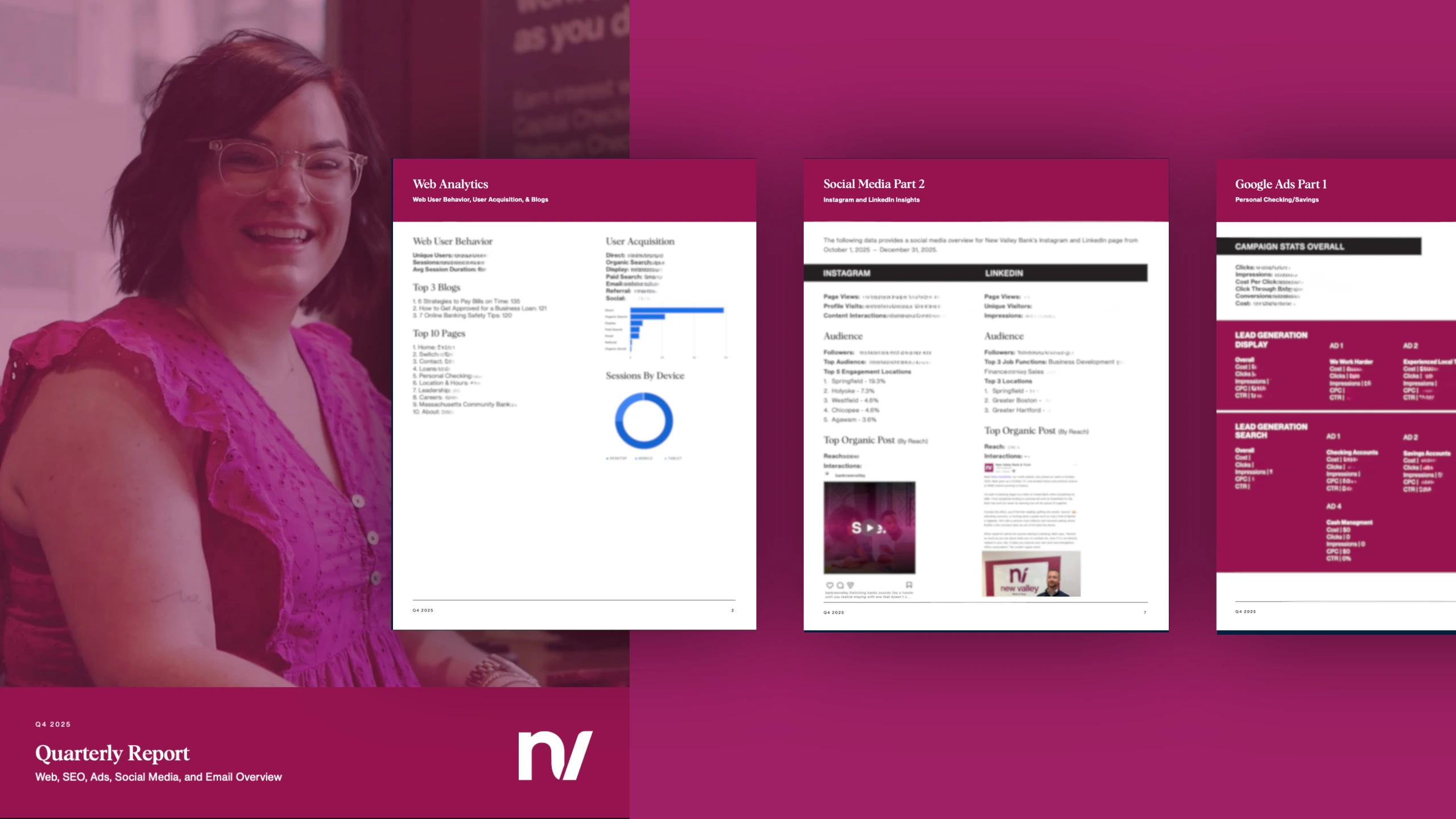
Measure More Than Traffic
One of the most common digital marketing mistakes is focusing exclusively on traffic metrics because while website visits matter, they don’t tell the entire story.
Financial institutions should also evaluate:
- Lead generation
- Application starts
- Resource downloads
- Appointment requests
- Email engagement
- Conversion rates
Over time, meaningful customer interactions contribute to growth, and marketing becomes significantly more effective when performance is tied directly to business objectives.
Growth Requires an Integrated Strategy
The most effective marketing strategies for banks and financial institutions are built around a connected ecosystem. One where SEO supports discoverability, content builds trust, advertising creates visibility, websites drive conversions, email nurtures relationships, and social media reinforces credibility.
Together, these efforts create a stronger customer experience and a more sustainable growth engine. Financial institutions that embrace this integrated approach are better positioned to attract new customers, deepen existing relationships, and compete in an increasingly digital marketplace.
At Cross & Crown, we help banks and financial institutions develop strategic marketing programs that connect content, digital advertising, websites, SEO, branding, and customer experience into a cohesive growth strategy. Let’s talk.

Cross & Crown
Based in Chambersburg, PA, we build & refine brands that inspire trust, drive engagement, lead with purpose, and ensure a thriving future.
Last Update: June 18, 2026
Read More
September 8, 2026
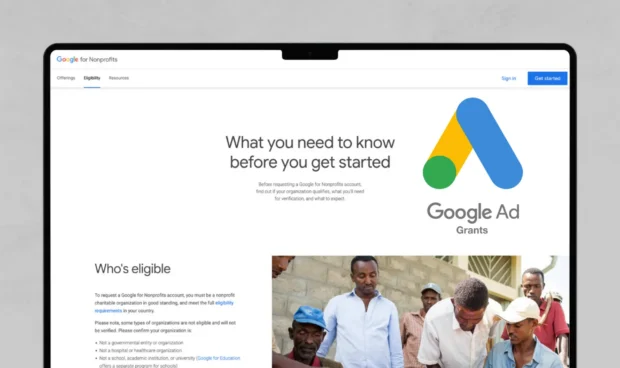
Google Ad Grant Eligibility: What Nonprofits Get Wrong
Many nonprofits focus on qualifying for the Google Ad Grant but overlook what comes next. This article explores the misconceptions that limit success, why strategy matters as much as eligibility, and how organizations can turn free advertising into meaningful engagement with donors, volunteers, and the communities they serve.
Read Post
September 1, 2026
A County Government’s Guide to Modern Public Communications
Public trust is built one interaction at a time. Discover how county governments can modernize their communications, improve the resident experience, and support long-term engagement with practical, people-first strategies.
Read Post
August 17, 2026
Email Drip Campaign Strategies for a Better Customer Journey
Email automation works best when it feels personal. Learn how drip campaigns help businesses connect with audiences, nurture relationships, and deliver the right message at the right time.
Read Post