

Content creation often dominates marketing conversations, with blogs, videos, and original research forming the core of many brands’ strategies. However, successful content marketing efforts rarely rely on creation alone. Many marketing teams ask a practical question: “What is content curation, and how does it complement original work?”
A well-planned content curation strategy enhances original content rather than replacing it. While content creation builds authority and a unique brand voice, content curation reinforces credibility by showcasing your brand’s awareness of industry trends and broader conversations.
What Is Content Curation?
Content curation involves selecting, organizing, and sharing relevant third-party content with your target audience while adding your own insightful perspective. Unlike content creation, which produces original blog posts, videos, or graphics, content curation marketing focuses on surfacing valuable existing information and framing it to benefit content consumers.
Effective curation always provides context. When sharing reports, articles, or industry insights, brands should explain why the content matters, how it connects to current trends, and what takeaways their audience should gain. Without this added perspective, curation risks becoming mere reposting; with thoughtful commentary, it becomes valuable, engaging content.
Benefits of Content Curation
Incorporating content curation into your content marketing efforts offers several advantages:
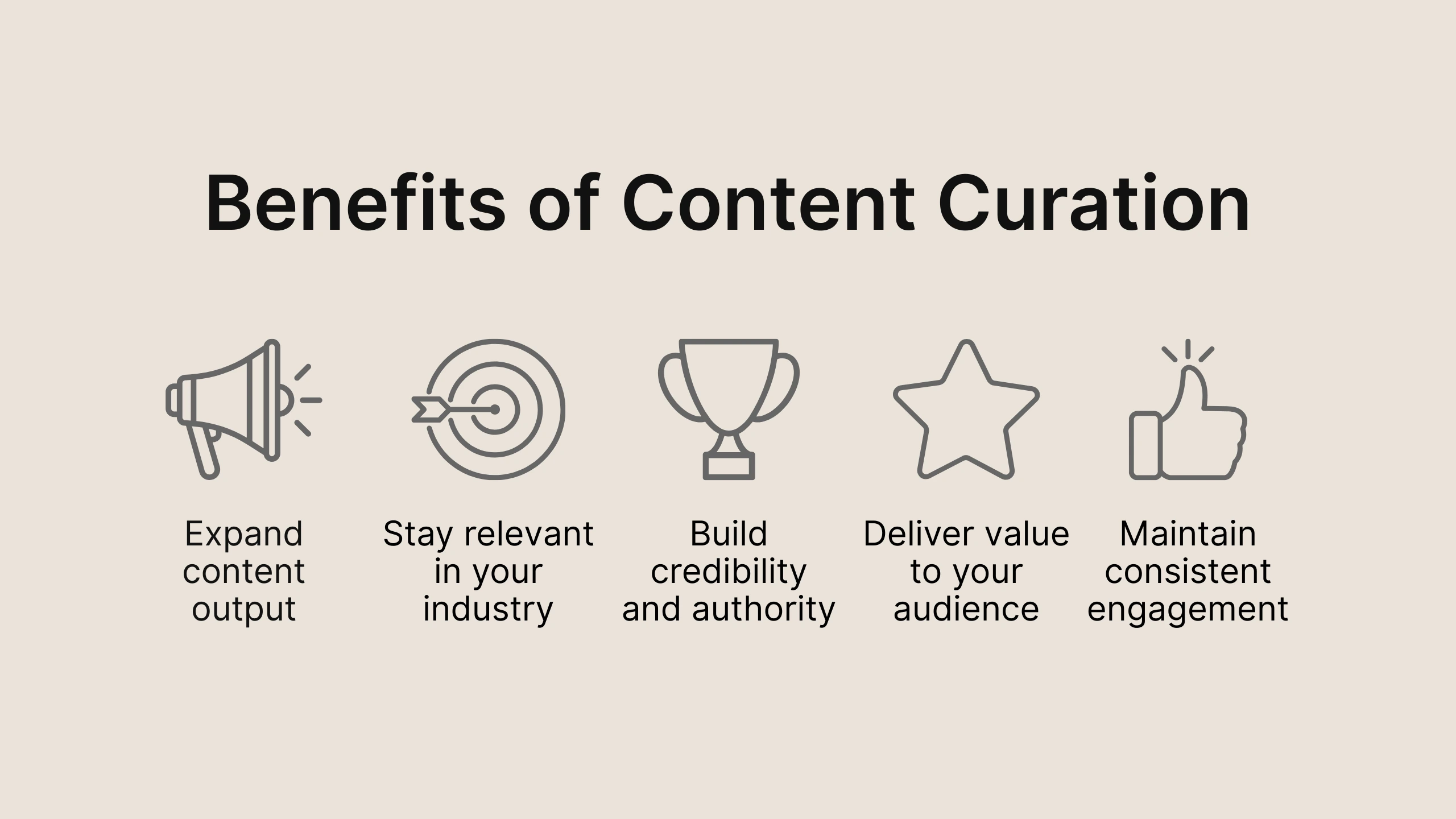
- Expands content output without overwhelming your marketing team
- Demonstrates your brand’s awareness of industry developments
- Builds credibility through thoughtful commentary
- Provides audiences with curated resources they might not discover on their own
- Supports ongoing engagement across social media platforms, newsletters, and blogs
Balancing original content with curated insights helps maintain a vibrant content ecosystem while efficiently reaching a broader audience.
Content Curation vs. Content Creation
Both content curation and content creation serve distinct but complementary roles within a successful content strategy. Content creation establishes your brand’s unique voice and expertise through original blog content, research, guides, and case studies that drive organic traffic over time. Conversely, content curation broadens the conversation by introducing relevant insights and reinforcing your position as a knowledgeable industry guide.
An effective content marketing strategy includes:
- Original content that showcases expertise
- Curated insights that add valuable perspective and context
- Commentary that connects both approaches
This balance ensures your content remains fresh, relevant, and engaging for your specific audience.
How Content Curation Supports SEO
Search engines reward content that helps users understand industry trends and developments. While original content builds long-term authority, curated content allows your brand to respond quickly to emerging conversations. Well-crafted roundups, expert commentary on reports, or timely analysis can capture search interest around topics your audience is actively exploring.
The key to SEO success with content curation is adding clear, meaningful perspective. When curated content explains why something matters or how it affects your audience, it becomes more than a collection of links—it becomes a valuable resource that keeps readers engaged longer. This, in turn, improves search visibility and positions your brand as a trusted guide through complex topics.
Structuring a Content Curation Strategy That Adds Value
Effective content curation requires intentional planning and a clear distribution plan to reach the right audience. Randomly sharing articles offers little benefit, but thoughtful curation strengthens your brand’s authority and supports your marketing goals.
Common content curation formats include:
- Industry roundups: Regular posts highlighting key news, research, or thought leadership
- Expert commentary: Sharing reports or studies with your organization’s unique perspective
- Resource collections: Curated lists of tools, guides, or insights to help your audience solve problems
- Newsletter curation: Blending original writing with curated articles to provide ongoing value
Each format delivers valuable, high-quality content that resonates with your audience and supports broader marketing objectives.
Tools to Simplify Content Curation
Consistent and successful content curation is easier with the right tools. Many teams use content curation tools to discover, organize, and publish relevant resources efficiently. Popular options include:
- Feed readers that monitor industry publications
- Social listening platforms to surface trending discussions
- Newsletter aggregation tools
- Bookmarking platforms for organizing research
While technology streamlines the curation process, human judgment remains essential to ensure the content you share is relevant, engaging, and aligned with your brand’s voice.

The Role of Content Curation in Modern Content Marketing
Strong content marketing strategies combine original content creation with thoughtful content curation. Original articles, research, and storytelling form the backbone of your brand’s authority, while curated content expands the conversation, highlights important ideas, and provides your audience with broader industry insights.
By strategically balancing what you create and what you curate, you can increase brand awareness, engage your audience across multiple online platforms, and support your overall marketing goals.
If you’re ready to develop a smarter content marketing strategy that integrates both original and curated content, contact Cross & Crown today.

Cross & Crown
Based in Chambersburg, PA, we build & refine brands that inspire trust, drive engagement, lead with purpose, and ensure a thriving future.
Last Update: March 19, 2026
Read More

October 19, 2026
A/B Testing in B2B: The Marketing Experiment You’re Probably Not Running
A/B testing gives B2B marketers a practical way to learn what resonates with their audience. Explore how split testing can improve websites, campaigns, emails, and paid advertising while helping teams make smarter marketing decisions.
Read Post
October 12, 2026
The State of Marketing in the Age of AI
AI is changing how marketers work, from content creation and automation to personalization and campaign strategy. Here’s what we’re seeing, what we think is worth paying attention to, and why human strategy and creativity will continue to matter.
Read Post
October 5, 2026
How to Market a Church Without Compromising Your Mission
Church marketing can feel at odds with a church’s mission, but thoughtful communication can help more people find and connect with the ministry already happening in their community. Here’s how to market a church with clarity, authenticity, and a focus on serving people well.
Read Post