
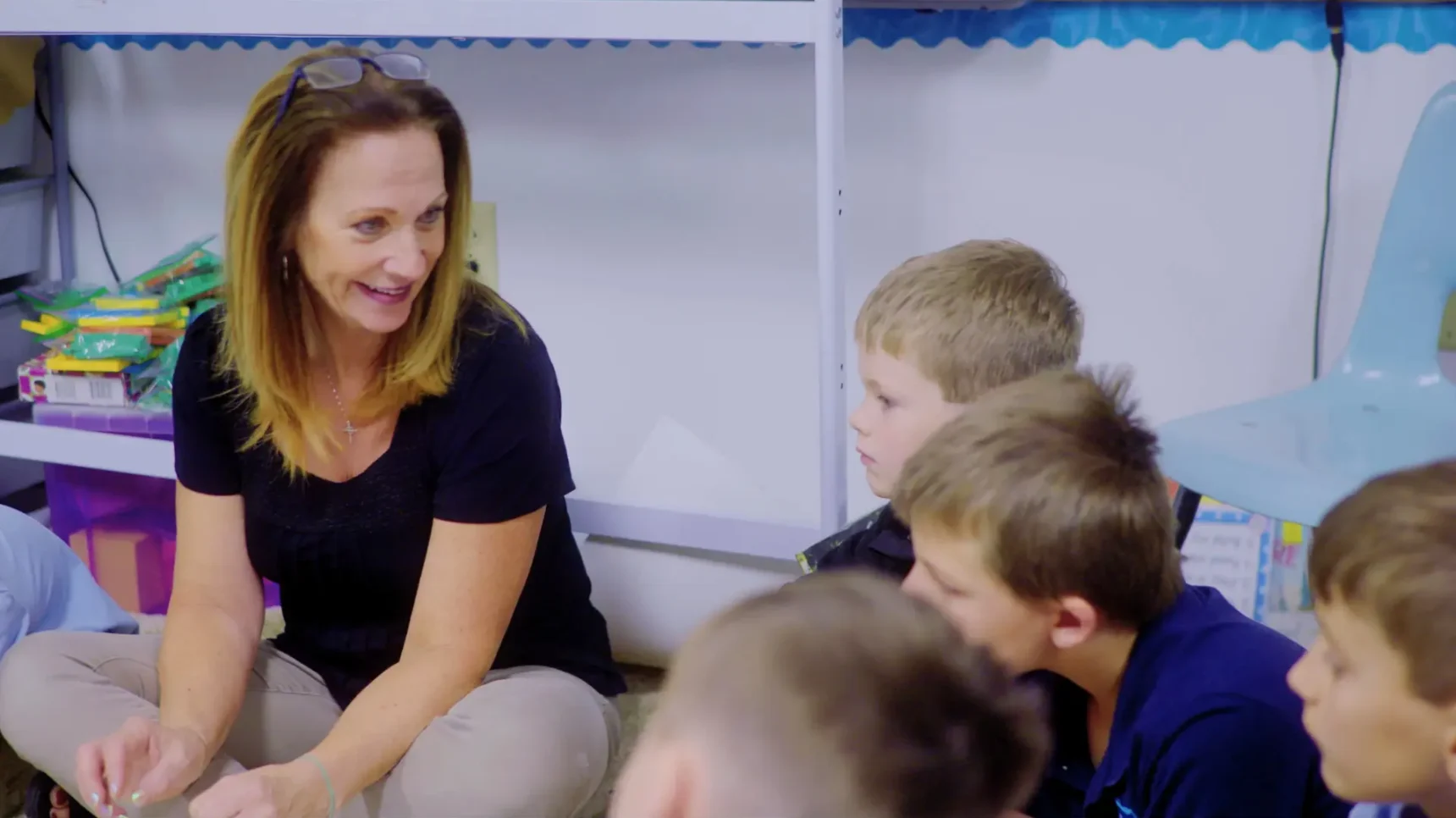
Imagine you’re a founder launching a new K–8 classical Christian school for Fall 2026. You have a compelling vision, a committed board, and a location secured—but no alumni, no test scores, and no years of tradition to point to. Parents ask the same question: “How do I know this will be a good fit for my child?”
This is the core challenge when marketing a new private school. Unlike established independent schools with decades of college acceptances and alumni success stories, you’re asking families to trust something that exists primarily as a promise.
New schools face unique challenges: limited budgets (often $10K–$50K in Year 1), small staff handling multiple roles, little brand awareness, and families’ understandable risk-aversion. But with a practical framework—one that communicates mission, vision, and everyday culture—you can achieve steady student enrollment growth.
Clarify Your Mission, Vision, and Educational Distinctives
All private school marketing strategies depend on clarity about why your school exists and who it serves. Before you design a logo or launch a website, you need to articulate what makes your school unique.
Defining your niche involves identifying what makes your school special—whether that’s a specific academic philosophy, a commitment to small class sizes, or an integrated approach to faith formation.
Turn broad statements into parent-friendly language. Instead of “excellence in education,” describe what daily life looks like: “Students begin each morning with Socratic discussion, integrate Scripture across subjects, and develop the habits of eloquent communication by Grade 8.”
Key questions for founders to answer:
- What kind of graduate are we shaping by Grade 12?
- What does a typical student day look like?
- What measurable outcomes can we point to before we have alumni data?
- Why is this school needed in this community right now?
- How do we differ from public schools and homeschool options?
These answers feed directly into website copy, admissions conversations, and outreach events—reducing “fit” objections before they arise.
Define Your Ideal Families and Enrollment Goals
Effective school marketing starts with clearly defined audiences rather than “anyone who can pay tuition.” Without this focus, you risk wasting budget on generic advertising that reaches no one who matters.
Create 2–3 detailed family profiles. For example:
| Persona | Description | Where to Reach Them |
| Relocating Family | Professionals moving to your area, seeking rigorous K–6 education, active in church communities | Facebook groups, church bulletins |
| Local Homeschoolers | Parents seeking community and academic support, often with children needing reading intervention | Homeschool co-ops, local events |
| Grandparent-Funded | Grandparents paying tuition who prioritize faith formation | Pastor referrals, direct mail |
Enrollment goals should be specific, measurable, attainable, relevant, and time-based (SMART) to effectively track progress. A realistic target might be 40 students in 2026–27, 65 in 2027–28, and 90 in 2028–29—each tied to financial sustainability.
Consider all decision-makers: parents (primary), grandparents (often paying tuition), homeschool co-op leaders, and even local pediatricians who field “school recommendations.”
Build a Strong Brand Foundation Early
For a new school, your brand is essentially “a promise plus an experience.” Before families ever visit, your visual identity signals whether you’re trustworthy and aligned with their values.
Essential brand elements:
- Name: Memorable and reflective of your values
- Logo: Simple and appropriate for your academic rigor
- Tagline: Clear value proposition
Brand misalignments to avoid:
- Playful children’s fonts for a rigorous high school (drops credibility significantly)
- Generic stock photos that don’t match your actual community
- Inconsistent colors across print, social media, and signage
Create a basic brand guide that can scale as you grow, ensuring volunteers and future staff maintain consistency.
Design a School Website That Builds Credibility and Boosts Enrollment
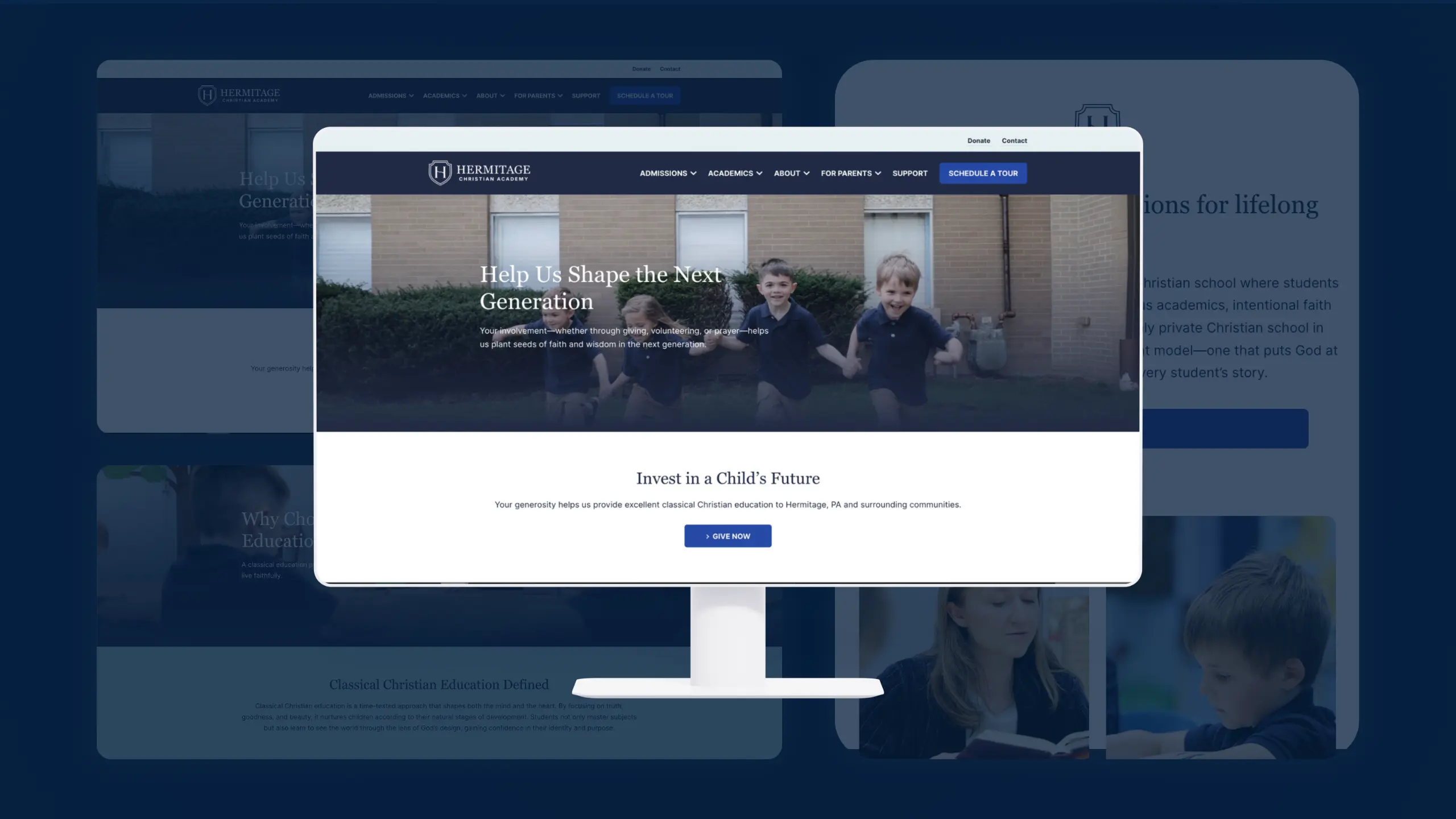
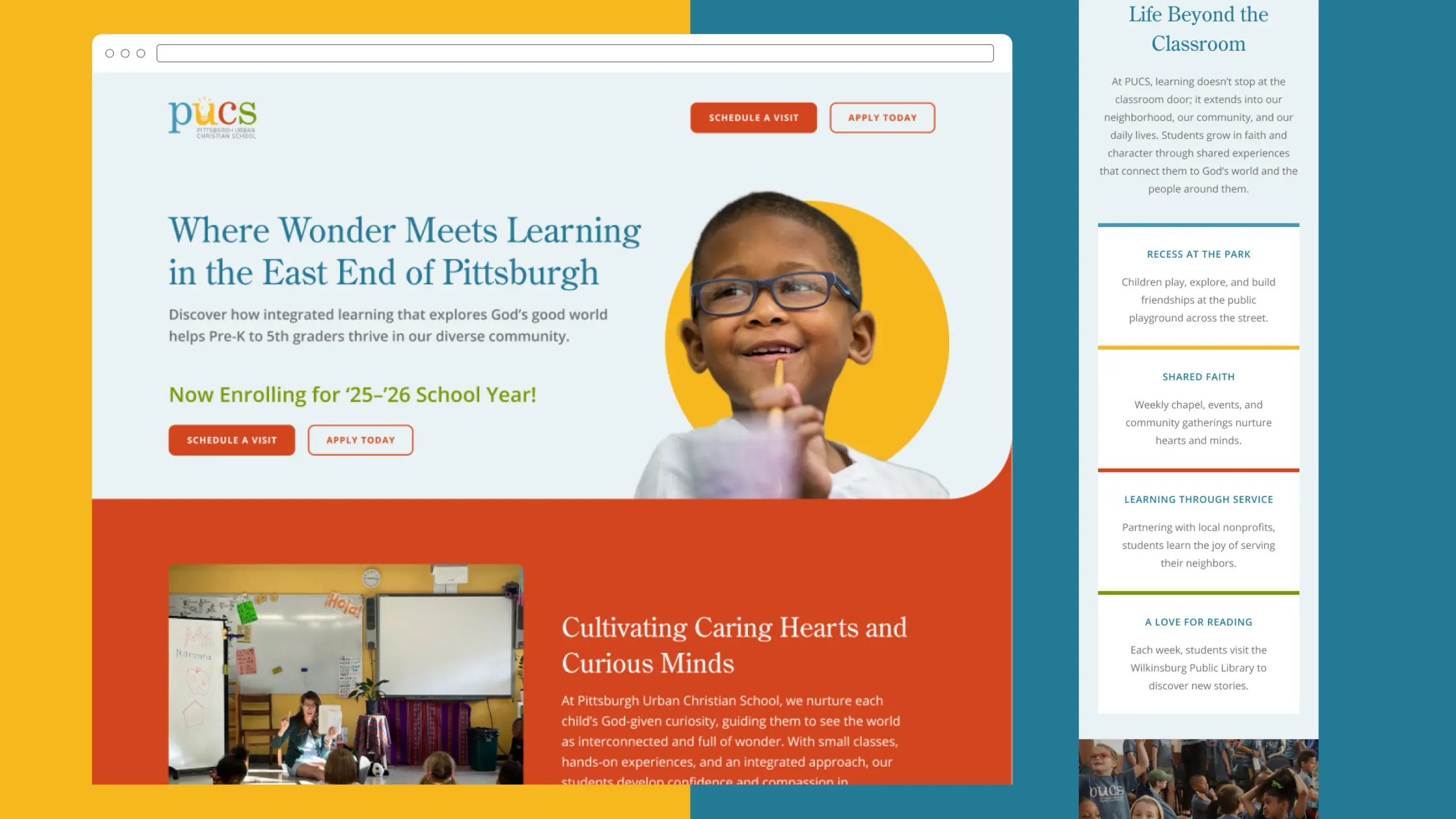
For new private schools, the school website is often the first campus visit. Research shows 90% of families check a school’s website before ever scheduling a tour. You have roughly 30 seconds to answer core trust questions or lose them.
Optimizing your website builds brand credibility by improving a school’s overall search rankings and bringing in targeted traffic, which is essential for attracting potential students.
Your homepage should include:
- Clear value proposition
- Grade levels, location, and educational philosophy
- Quick paths to “Visit,” “Inquire,” and “Apply”
Essential pages for new students:
| Page | Purpose |
| About | Founder story, mission, visuals of campus |
| Academics | Sample schedules, curriculum overview |
| Student Life | “Day in the life” timelines, school life snapshots |
| Tuition & Financial Aid | Transparent tiers, aid information |
| FAQs | Answers addressing common concerns |
| Meet the Head | Bio and video to build personal connection |
Search engine optimization (SEO) focuses on several major areas, including keyword research, on-page optimization, and link building, which are crucial for enhancing website visibility. Use local SEO phrases like “private school in [city, state]” and “Christian microschool near [neighborhood]” in headings and meta titles. Utilizing local SEO and Google Ads helps optimize visibility for parents searching for educational options in specific areas.
A well-maintained school website should be regularly updated with resources and information to prevent broken links and pages, which can deter prospective families from enrolling.
Integrate simple lead-capture forms like “Download our 2026–27 Parent Guide.” Lead nurturing via email can keep interested families informed and engaged throughout the inquiry and application process.
Create a Thoughtful Marketing Plan for Your First 24 Months
A written private school marketing plan helps founders, admissions directors, and school boards stay focused through pre-launch chaos and the demanding first two school years.
Most families need at least five touchpoints before deciding to enroll. Your plan should map these touchpoints deliberately.
Your marketing plan should cover:
- Goals for new students per term
- Target market and family personas
- Core messages about your school’s mission
- Key marketing strategies with timelines
- Basic budget ranges (3–8% of projected tuition revenue)
Phase your first 24 months:
| Phase | Timeline | Activities |
| Awareness | Jan–Aug 2026 | Brand development, website launch, vision-casting content |
| Interest | Sep–Dec 2026 | Info nights, content marketing, social media launch |
| Decision | Jan–May 2027 | Open houses, campus tours, personalized email follow-up |
| Re-enrollment | Fall 2027+ | Current family surveys, early re-enrollment invitations |
A well-executed digital marketing campaign can significantly boost enrollment, with strategies including effective call-to-actions, landing pages, and search engine optimization. Prioritize 2–3 tactics per quarter rather than spreading thin across ten channels.
Tell Your Story Through Content Marketing
Content marketing is about “teaching families who you are” through regular, authentic stories rather than promotional hype.
Plan 3–4 core content themes reflecting your educational distinctives:
- Classical education methods and outcomes
- Christian discipleship and character formation
- Community and belonging
- Student experiences and daily rhythms
Content types for 2026–2027:
- Blog posts: “Why We Chose a Classical Model for Modern Families”
- Short videos: “A Day in Grade 2” (2 minutes, high engagement)
- Parent Q&As on Instagram or Facebook Live
- Guest posts on local parenting blogs or church newsletters
Repurpose efficiently: one story about a student project becomes a blog article, 3–4 social posts, and a segment in the monthly parent newsletter.
Consistency matters more than volume. Even one strong post per week builds familiarity and trust with potential families.
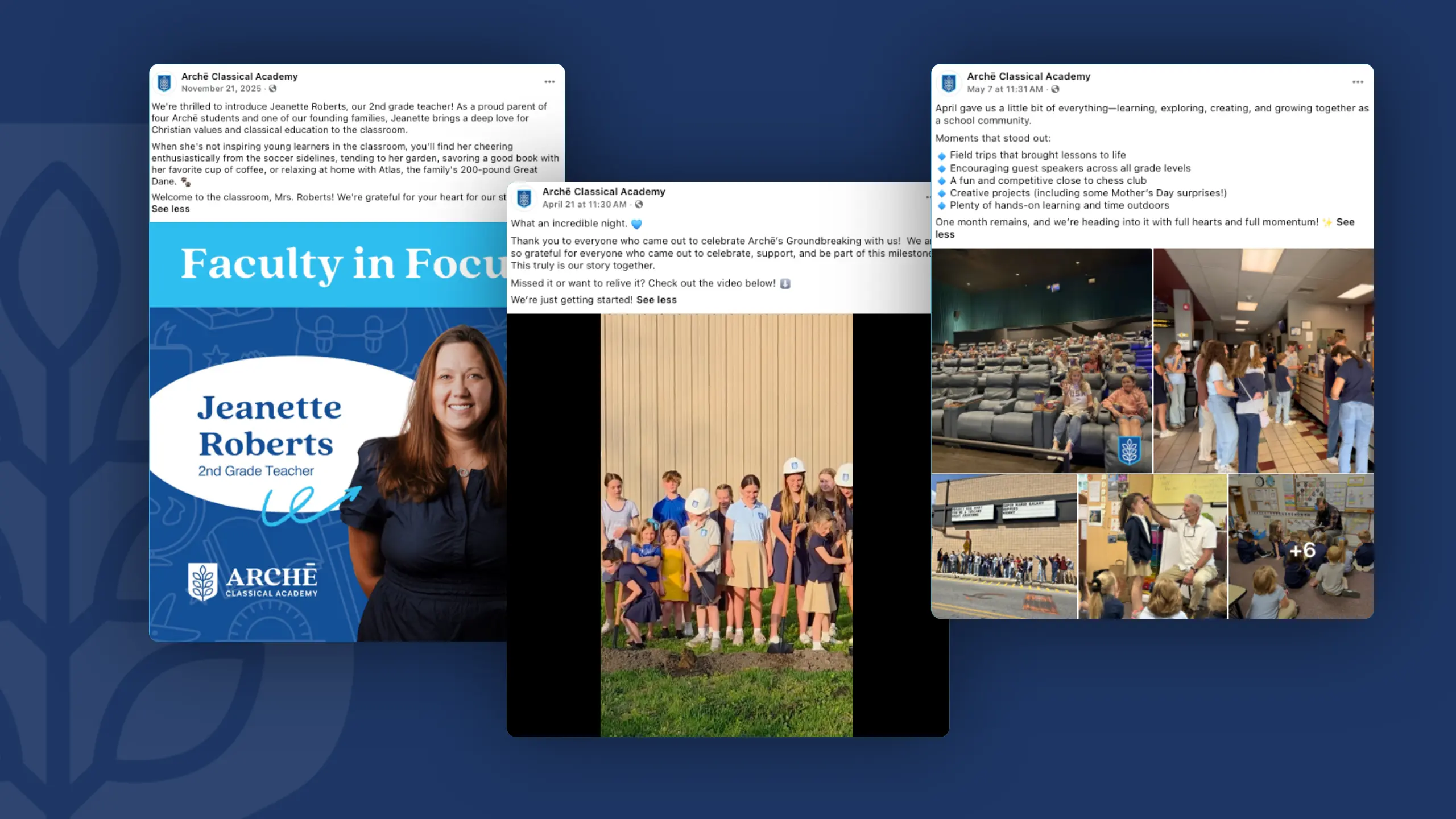
Leverage Social Media to Humanize Your New School
Social media for a new private school should serve as “windows into daily life” rather than a constant sales pitch.
Platform recommendations:
- Focus on 1–2 social media platforms where local parents spend time (typically Facebook and Instagram)
- Post 3 times per week during your 2026–27 launch year
- Maintain separate social media accounts for different audiences if needed
Post ideas that engage families:
- Classroom snapshots (with proper permissions)
- Short teacher introductions building credibility
- Behind-the-scenes campus preparation
- Student work and projects
Keep your tone warm and professional, and try to respond to DMs within 24 hours.
Tie Instagram ads and Facebook promotions to specific enrollment goals rather than generic brand awareness.
Encourage Word-of-Mouth and Online Reviews from the Start
For new private and microschools with small budgets, trusted recommendations from enrolled families are often the single most powerful marketing tool.
Cultivate early advocates:
- Founding families who believe deeply in your vision
- Board members active in local churches and organizations
- Pastors and community leaders who can introduce families
An ambassador program can leverage early adopters to drive enrollment by connecting personally with potential families.
Once your first families enroll, ask for honest, story-focused feedback. Sample prompts include:
- “Share one way our school helped your child grow this fall.”
- “What surprised you most about joining our community?”
Even a dozen thoughtful reviews in the first year dramatically boost credibility and local search results visibility.
Measure What Matters and Refine Your Marketing Strategy
Rather than drowning in data, track a few meaningful metrics that directly tie to enrollment goals.
Key metrics for new schools:
| Metric | Why It Matters |
| Inquiries per month | Measures awareness and interest |
| Tour bookings | Shows movement through the funnel |
| Applications started/completed | Conversion indicator |
| Tour-to-enrollment rate | Quality of experience (target 20–30%) |
| Inquiry sources | Reveals which channels drive enrollment |
Simple tools work: spreadsheets, form submissions connected to email marketing platforms like Mailchimp, and Google Analytics for website traffic and search results tracking.
Hold monthly or quarterly reviews with leadership to assess what’s working and shift resources toward high-performing channels.
Partnering with Cross & Crown as Your Strategic School Marketing Team
Cross & Crown serves as a long-term strategic partner for new and emerging private schools. The focus is on helping schools clarify their story, build a strong brand, launch an effective school website, and develop sustainable digital marketing strategies that support enrollment.
If you’re a founder, head of school, admissions director, or board member preparing for a 2026 or 2027 launch, let’s discuss your specific timeline, enrollment numbers targets, and what it takes to effectively market your school from day one. The goal is simple: help you communicate your school’s vision more clearly and serve families more effectively.

Cross & Crown
Based in Chambersburg, PA, we build & refine brands that inspire trust, drive engagement, lead with purpose, and ensure a thriving future.
Read More

June 10, 2026
Conservation Storytelling: How Nonprofits Turn Digital Narratives into Real-World Action
Discover how conservation nonprofits turn digital storytelling into real-world action through trust-building, place-based narratives, and strategy with Cross & Crown.
Read Post
June 1, 2026
SEO and Social Media: How They Work Together to Build Trust, Traffic, and Visibility
Discover effective strategies to combine SEO and social media for greater online visibility. Learn how to drive engagement and boost your impact today!
Read Post
May 26, 2026
Stand Out in Your Industry With Drone Video Marketing Services
Cross & Crown uses FAA-certified drones to create aerial video and photography for marketing across real estate, construction, tourism, and local brands throughout Pennsylvania and the Mid-Atlantic region. Read more to discover how drone video marketing works, where to use it, and creative ways to make your brand stand out.
Read Post