

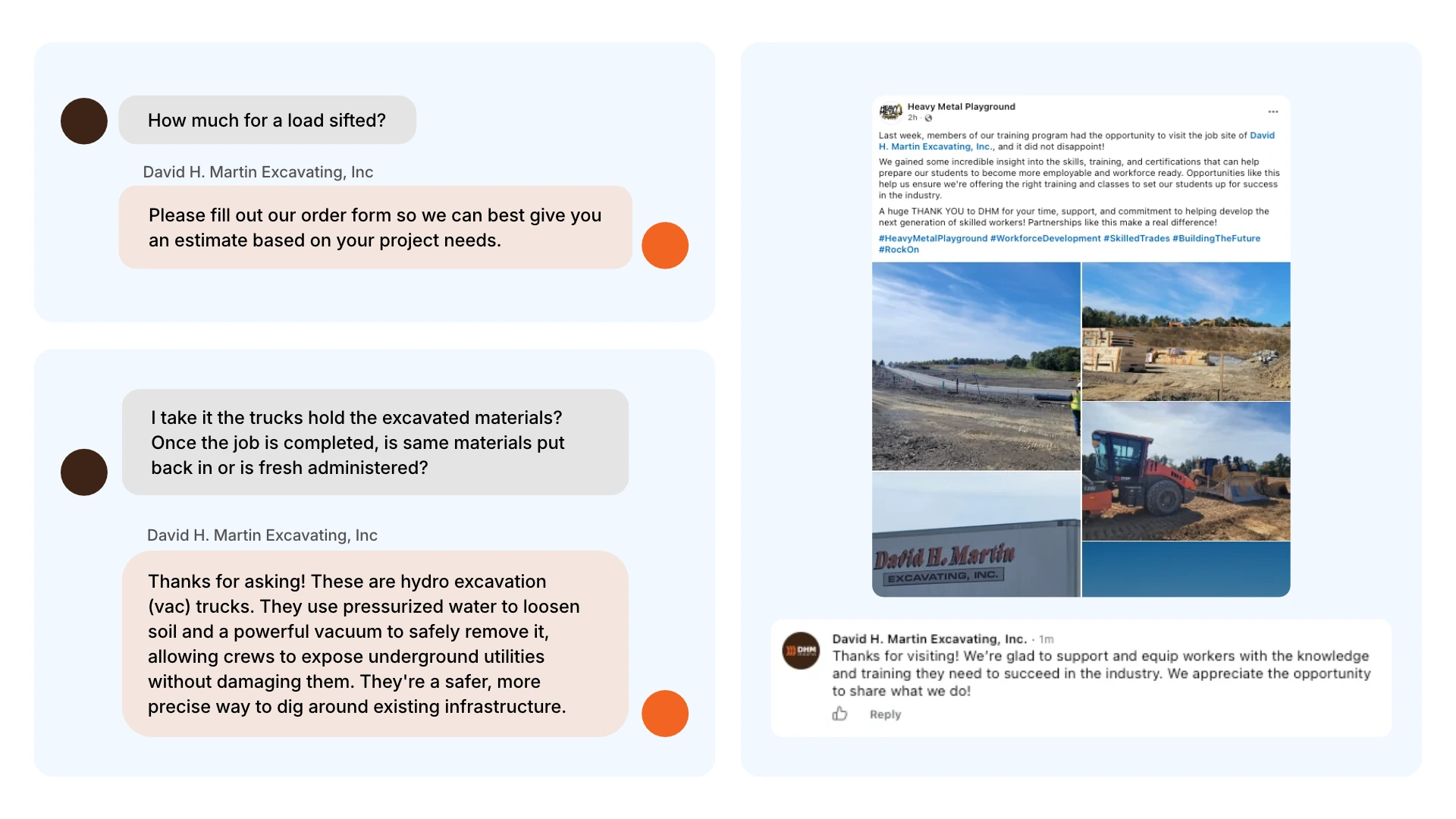
Social media can introduce someone to your business, but the conversations that follow can give them a reason to remember you. That might look like answering a prospect’s question on LinkedIn, responding to an Instagram DM about your services, or joining a discussion on an industry post alongside potential partners. Each interaction is an opportunity to be helpful, show your brand’s personality, and begin building a relationship.
That’s where social media community management comes in. It involves listening and responding to conversations around your brand, participating in relevant discussions, and building relationships with the people who make up your online audience.
For B2B companies, professional service providers, and nonprofits, these interactions can support business development, strengthen brand reputation, and create opportunities that a scheduled content calendar alone may miss.
What Is Social Media Community Management?
Social media community management is the ongoing work of engaging with people across social platforms through comments, direct messages, mentions, groups, and relevant conversations on other accounts. It helps an organization build relationships with its audience instead of treating social media as a one-way publishing channel.
Social media marketing often focuses on the content a business publishes and the reach or engagement that content receives. Community management focuses on what happens around that content and throughout the wider online community.
The two work best together. A useful post can attract attention, while a thoughtful response can help turn that attention into a conversation.
Community management may include:
- Replying to questions and comments on your own posts.
- Responding to direct messages and brand mentions.
- Joining relevant conversations on industry accounts and professional communities.
- Sharing useful resources when they genuinely address someone’s question.
- Recognizing customers, partners, employees, and community members.
- Monitoring feedback and recurring questions to identify opportunities for improvement.
- Escalating complaints, sensitive issues, or complex questions to the right person.
These activities help make a brand feel accessible and attentive. They also give businesses a clearer picture of what their audience cares about, what problems people are trying to solve, and where a helpful conversation might lead.
How Comments and DMs Can Lead to New Customers
A comment or direct message rarely guarantees a sale. In B2B marketing, the buying process may involve multiple conversations, several decision-makers, and weeks or months of consideration. Community management can help build familiarity and trust throughout that process.
1. A helpful answer can start a business conversation
Imagine someone comments on a LinkedIn post asking how to improve their organization’s website conversion rate. Your team responds with a useful suggestion, explains a common issue, or points them toward a resource that offers more detail.
That answer demonstrates your knowledge without immediately asking for a meeting.
If the person has a related challenge, they may continue the conversation, visit your website, or reach out about your services. Even when the interaction doesn’t lead to a sales opportunity, it can leave a positive impression that carries into a future decision.
Give people something useful before asking them to take another step.
2. Direct messages can reveal buying intent
Direct messages often provide more context than a public comment. Someone might ask about pricing, service availability, project timelines, or how your process works. Those questions can signal that they’re exploring their options.
A good response should make the next step easier. Answer what you can, ask a clarifying question when needed, and offer to connect the person with someone who can help.
For example, a marketing director who asks about your website services may benefit from a brief conversation about their current site, priorities, and timeline. A nonprofit leader who messages your team about branding may need guidance on the scope of a rebrand before requesting a proposal.
Not every inquiry is sales-ready. Some people are researching, gathering information, or looking for a quick answer. Treating each message as an invitation to understand their needs makes the exchange more natural and useful.
3. Public replies demonstrate how your business works
A thoughtful response does more than help the person who asked the question. Other people can see it, too. Prospective customers may review a company’s social profiles before reaching out. They can notice how the team handles questions, responds to criticism, shares expertise, and interacts with others in the industry.
A clear, respectful reply can offer a small but meaningful example of your communication style. A dismissive or overly promotional response can leave a different impression.
Community management gives your business opportunities to demonstrate the qualities you want customers to experience when working with you: attentiveness, knowledge, reliability, and respect.
Tips for B2B Teams
Effective community management doesn’t require someone to spend every hour refreshing social feeds. A manageable routine, clear priorities, and a consistent approach can make the work easier to sustain.
1. Choose platforms based on your audience
Start with the places your customers, prospects, partners, or supporters already spend time.
- LinkedIn is often a strong starting point for B2B organizations. Teams can engage with industry discussions, respond to comments, connect with decision-makers, and participate in conversations about business challenges.
- YouTube offers opportunities to answer questions in video comments, respond to feedback, and connect with viewers who are researching a topic or service.
- Reddit and relevant online forums can help teams understand niche questions and participate in specialized communities. These spaces often have strong expectations around self-promotion, so helpful participation and respect for community rules are essential.
- Instagram, Facebook, and other social platforms can be valuable for businesses and nonprofits whose audiences use them to discover organizations, ask questions, follow updates, and connect with local communities.
A few channels managed thoughtfully can be more valuable than a presence spread across platforms your team can’t maintain.
2. Set goals before deciding how much to engage
Community management can support several business objectives, and each one calls for a slightly different approach.
- Brand awareness: Join relevant conversations and make your organization easier to recognize.
- Lead generation: Respond to service questions and identify people who may need additional information.
- Customer retention: Help existing customers find answers, share feedback, and feel supported.
- Thought leadership: Contribute informed perspectives to discussions in your field.
- Partnership development: Build relationships with complementary businesses, industry peers, and community organizations.
- Audience research: Look for recurring questions, concerns, and language that can inform your marketing.
Clear goals also help teams decide what success looks like. A company focused on partnerships may value meaningful exchanges with industry peers, while a service provider may pay closer attention to qualified inquiries and conversations that lead to consultations.
3. Make your replies sound like a person wrote them
People can usually tell when a response feels copied and pasted. Templates can help teams work efficiently, especially when answering routine questions, but they should leave room for a relevant, personal reply.
Use the person’s name when appropriate. Address the specific point they raised, keep the language clear, and avoid turning every interaction into a pitch for your services.
For example, a comment that says, “We’re struggling to get people to visit our new website,” deserves a more useful response than “Thanks for sharing! Contact us to learn how we can help.”
A better reply might acknowledge the challenge and offer a starting point: “Have you looked at how visitors are finding the site and what they do once they arrive? Comparing traffic sources with key page activity can help narrow down where people may be dropping off.”
That kind of answer demonstrates knowledge while giving the other person room to continue the conversation.
4. Participate in other people’s conversations
Community management doesn’t stop at your own profiles. Follow relevant industry leaders, professional organizations, customers, partners, and complementary businesses. Join discussions where your team can contribute a useful perspective, celebrate a meaningful achievement, or answer a question within your area of expertise.
For B2B teams, this can support networking and relationship-building beyond the people who already follow your account. A thoughtful comment on a partner’s announcement or an insightful contribution to an industry discussion may introduce your business to a new audience.
Keep the interaction genuine. Comments that simply praise a post or insert a sales message into an unrelated discussion rarely contribute much. Aim to add context, share experience, or ask a question that moves the conversation forward.
Best Practices for Comments and DMs
A consistent approach helps teams respond promptly while protecting the brand’s reputation and keeping conversations productive.
Establish response expectations
Decide who monitors each platform, how frequently messages are checked, and how quickly different types of inquiries should receive a response. Set expectations that your team can realistically maintain. For example:
- A simple question about business hours may need a quick answer.
- A technical concern or detailed service inquiry may require input from another department.
- A complaint involving a sensitive issue may need immediate attention from a manager.
Acknowledge messages when a full answer will take time, and let the person know what happens next. Avoid promising a response time your team cannot reliably meet.
Know when to move a conversation into DMs
Public comments are useful for general questions that others may have, too. A direct message is usually better for private account details, personal information, project specifics, or a more involved discussion.
If someone raises a complaint publicly, don’t automatically hide the conversation by asking them to message you. Acknowledge the concern in the original thread, then offer a private channel for details that shouldn’t be shared publicly. This approach shows other people that your organization is willing to respond while giving the individual room to discuss the issue.
Set moderation guidelines
Healthy communities need clear boundaries. Establish guidelines for spam, harassment, offensive content, misinformation, and comments that violate platform or community rules.
Moderation should be consistent and proportionate. A critical comment isn’t automatically a reason to delete a post or block someone. Constructive criticism can reveal a genuine problem and give your organization an opportunity to respond.
Remove or report content when it violates your stated guidelines, threatens someone’s safety, exposes private information, or otherwise warrants action. Document serious incidents and involve the appropriate team members when needed.
How Much Time Should You Spend on Community Management?
The right amount of time depends on your audience size, the number of platforms you use, the volume of incoming messages, and your goals.
A small B2B company with a modest LinkedIn following may start with a brief daily check of comments and messages, plus a few scheduled sessions each week to participate in relevant industry conversations. A larger organization with active customer communities may need dedicated coverage, documented moderation procedures, and more formal reporting.
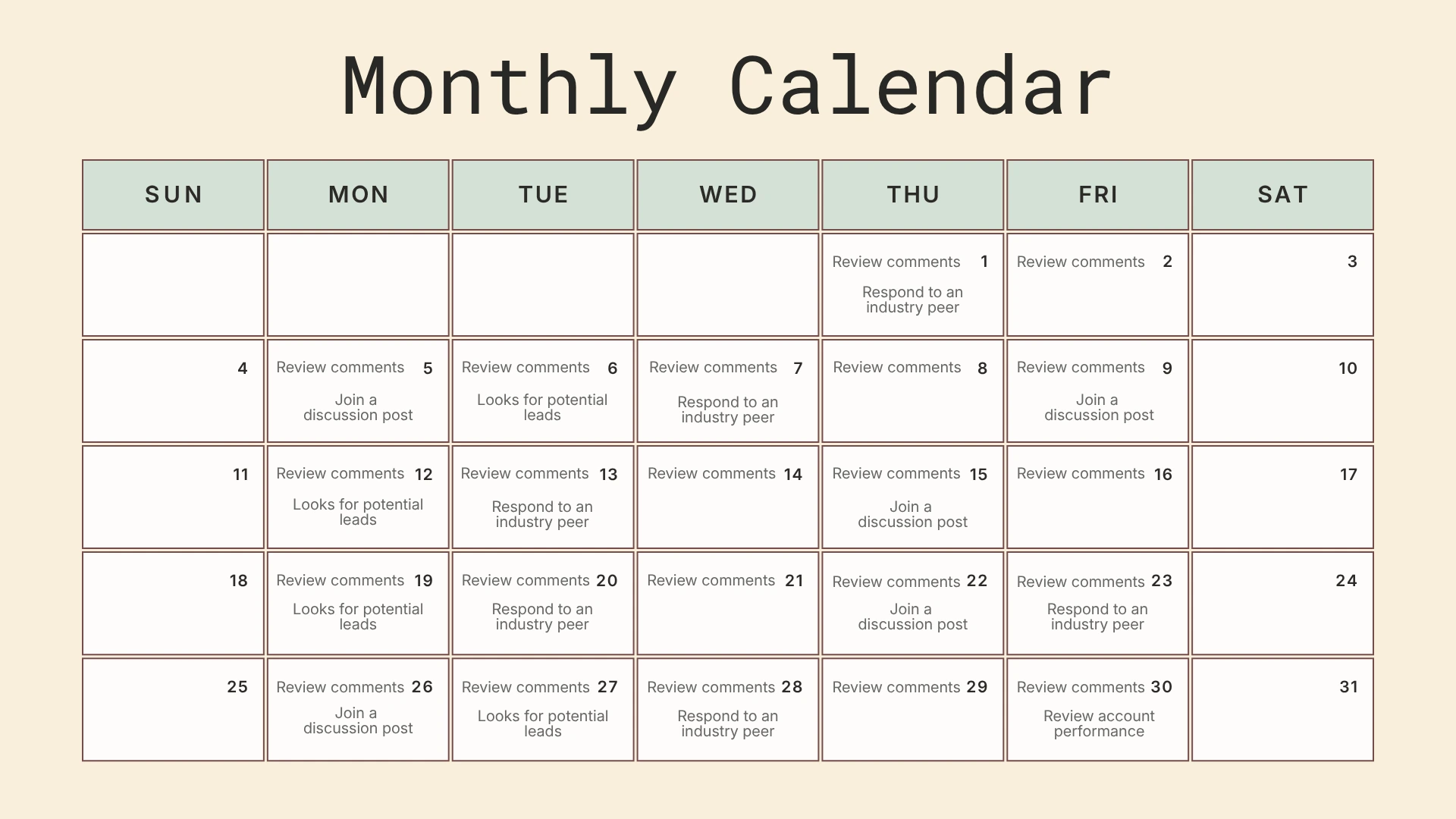
A practical starting routine might include:
- Daily: Review new comments, messages, mentions, and urgent issues.
- Several times a week: Join relevant discussions and respond to posts from industry peers or partners.
- Weekly: Look for recurring questions, potential leads, useful audience insights, and conversations that need follow-up.
- Monthly: Review performance and adjust your approach based on what the team is learning.
If the team is stretched across too many platforms, narrow the focus before adding more activity.
How to Measure Social Media Community Management
Follower counts and likes can help describe social activity, but they don’t tell the whole story. Community management needs measures that reflect the relationships and business outcomes your team is trying to build.
Useful metrics may include:
- Response time: How quickly your team responds to incoming questions and messages.
- Response rate: The share of relevant messages or comments that receive a reply.
- Conversation quality: Whether exchanges lead to useful questions, deeper discussions, or continued engagement.
- Qualified inquiries: The number of conversations that develop into legitimate sales or service opportunities.
- Referral activity: Website visits or inquiries that can be connected to social interactions, where tracking is available.
- Customer sentiment: Patterns in feedback, recurring concerns, and the tone of conversations over time.
- Partnership opportunities: Introductions, collaborations, and professional relationships that begin through social engagement.
You can also review qualitative insights:
- Are people repeatedly asking about a particular service?
- Are customers confused about a process?
- Do prospects use certain phrases to describe their challenges?
These patterns can inform future content, website messaging, and sales conversations.
Attribution can be difficult. Someone may interact with your company on LinkedIn, visit your website later, and contact your team through email. Social engagement may have contributed to the decision without being the final trackable touchpoint. Use available data alongside what your sales and client-facing teams hear, and avoid assigning revenue to a conversation without evidence.
Turn Social Media Conversations Into Stronger Relationships
Social media community management works best when it reflects the way your organization wants to build relationships everywhere else: with attention, useful information, and respect for the people on the other side of the screen.
For B2B businesses, that can mean answering a prospect’s question, building familiarity with industry peers, or helping a potential customer take the next step. For nonprofits, it may mean responding to a supporter, connecting with community partners, or making it easier for people to learn about a mission.
Cross & Crown helps organizations bring social media marketing into a broader digital strategy, alongside content, branding, website experiences, and other channels that support business and organizational goals. Our approach starts with understanding your audience and priorities, then identifying the work that can make the biggest difference for your team.
Ready to make your social media presence more intentional? Connect with Cross & Crown to talk about a strategy that fits your organization, your audience, and the resources you have available.

Cross & Crown
Based in Chambersburg, PA, we build & refine brands that inspire trust, drive engagement, lead with purpose, and ensure a thriving future.
Last Update: October 29, 2026
Read More

October 19, 2026
A/B Testing in B2B: The Marketing Experiment You’re Probably Not Running
A/B testing gives B2B marketers a practical way to learn what resonates with their audience. Explore how split testing can improve websites, campaigns, emails, and paid advertising while helping teams make smarter marketing decisions.
Read Post
October 12, 2026
The State of Marketing in the Age of AI
AI is changing how marketers work, from content creation and automation to personalization and campaign strategy. Here’s what we’re seeing, what we think is worth paying attention to, and why human strategy and creativity will continue to matter.
Read Post
October 5, 2026
How to Market a Church Without Compromising Your Mission
Church marketing can feel at odds with a church’s mission, but thoughtful communication can help more people find and connect with the ministry already happening in their community. Here’s how to market a church with clarity, authenticity, and a focus on serving people well.
Read Post